
February 12, 2026
Retail and eCommerce
IoT in Retail Execution: How Real-Time Data Drives Precision
Key Takeaways
- IoT systems deliver real-time inventory visibility with up to 98% accuracy compared to 65-75% with manual methods, eliminating stockouts and overstock.
- Proven cost savings include 10-30% energy reduction, 18% less shrinkage, and 10-15% reduction in inventory labor hours.
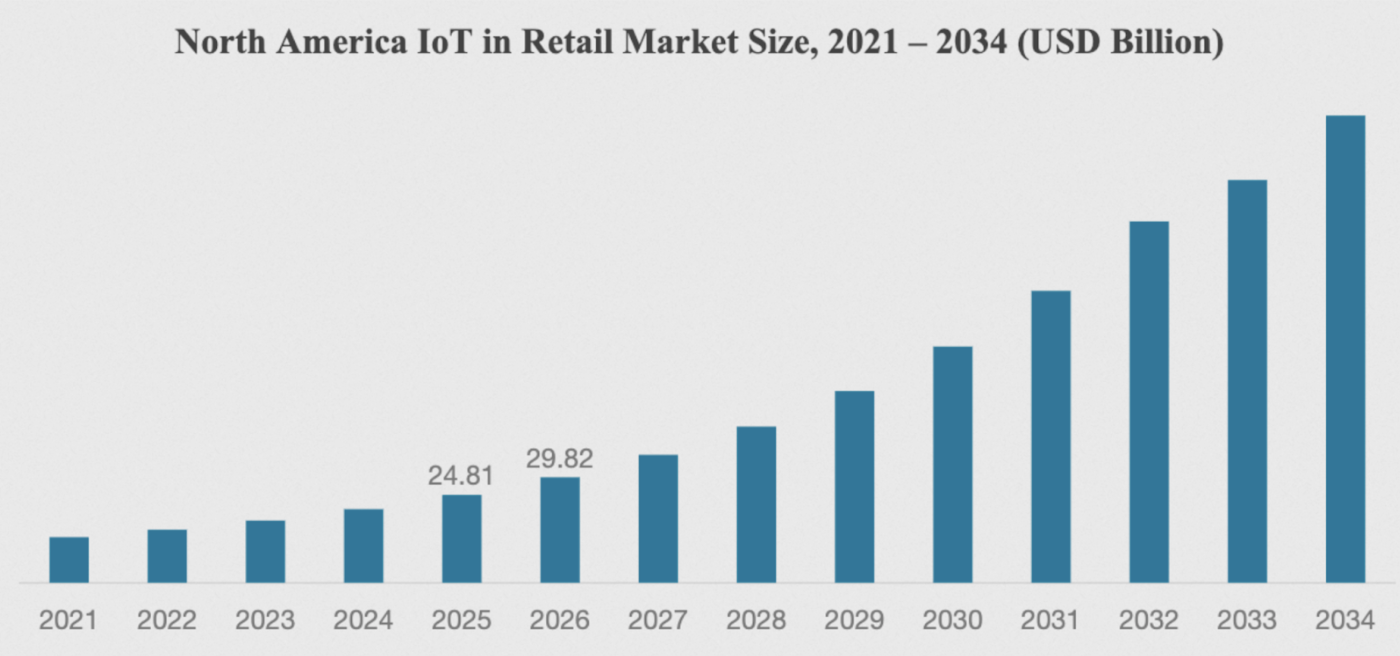
- The global IoT retail market is projected to grow from $70 billion (2025) to $482 billion (2034), driven by measurable ROI.
- Technology addresses both customer personalization and the $112 billion annual retail shrinkage problem through smart sensors and AI-powered security.
- Successful implementation requires strategic system integration, robust data security, pilot programs, and clear ROI planning—not just buying hardware.
 Source: Fortune Business Insights
What is IoT in Retail?
At its simplest, IoT in retail is a network of connected IoT devices, like sensors, tags, and cameras, that gather and share the data inside a retail environment. These devices work together to show exactly what is going on, from the items sitting on the shelves to how people walk through the aisles. The main parts usually include RFID tags to track specific items, Bluetooth beacons to see where customers are, smart shelves that check stock levels, and IoT sensors that monitor things like heat or humidity. You also have cameras that track store traffic patterns. All this info moves through Wi-Fi, cellular, or other networks into cloud platforms. There, software looks at the real-time data and helps managers figure out what to do next.The Building Blocks
The technology usually has three main parts. First is the device layer, which consists of the actual sensors and tags in stores or warehouses. Second is the connectivity layer, which moves the data. Reliable connectivity is essential here. Wi-Fi works for things that need a lot of bandwidth, Bluetooth Low Energy is good for finding things nearby, and cellular helps track items that are moving around. Third is the platform layer, which is the software that turns all that raw data into valuable insights for store operations. The big difference here is that you get a constant stream of information instead of just a single "snapshot." Old-school inventory systems might only update once a day or even once a week. IoT systems update in seconds. That speed matters when a customer asks if a specific size is in the back, or when a manager needs to handle a sudden rush of shoppers.From Barcodes to Connected Systems
Retail tech has moved steadily from old cash registers to barcodes and now to these connected systems. Barcodes changed how we checked out in the 1970s. RFID tech got better through the 2000s and 2010s as the price dropped. McKinsey says the average cost of an RFID tag has gone down by 80% over the last ten years to about four cents. At the same time, these tags have become twice as accurate and can be read from much farther away. Now that sensors are affordable and cloud computing provides the necessary power, retailers can finally see what is happening across their whole operation at any time.IoT Applications That Transform Retail Operations
These IoT applications can be used in almost every part of a retail company’s business operations. Here are the areas where they are making the biggest difference.Smart Inventory Management
Getting inventory numbers right has always been a struggle for retailers. Smart inventory management solutions address this challenge head-on. Research from the Auburn University RFID Lab found that old-fashioned counting methods are usually only 65-75% accurate. When there is a gap between what the computer says you have and what is actually on the shelf, you run into trouble. Customers get annoyed by out-of-stock items, too much money gets tied up in extra stock, and ordering systems start making bad choices based on wrong data. RFID changes that. Walmart used RFID to get their inventory accuracy up to 98%, which is much higher than the 70% industry average. Lululemon also reached 98% accuracy across 500 stores, and they made back their investment in a year or less. Decathlon managed to turn a 40-hour inventory count into a 90-minute job while keeping 99% accuracy, according to a case study from Agilence. This accuracy helps every part of the business. You have fewer empty shelves, which leads to more sales. It also makes "buy online, pick up in store" work better because you actually know the item is there, giving you true inventory visibility. With online shopping continuing to grow, this seamless integration is critical. It means your ordering systems buy what you actually need, not what an old report says you might need.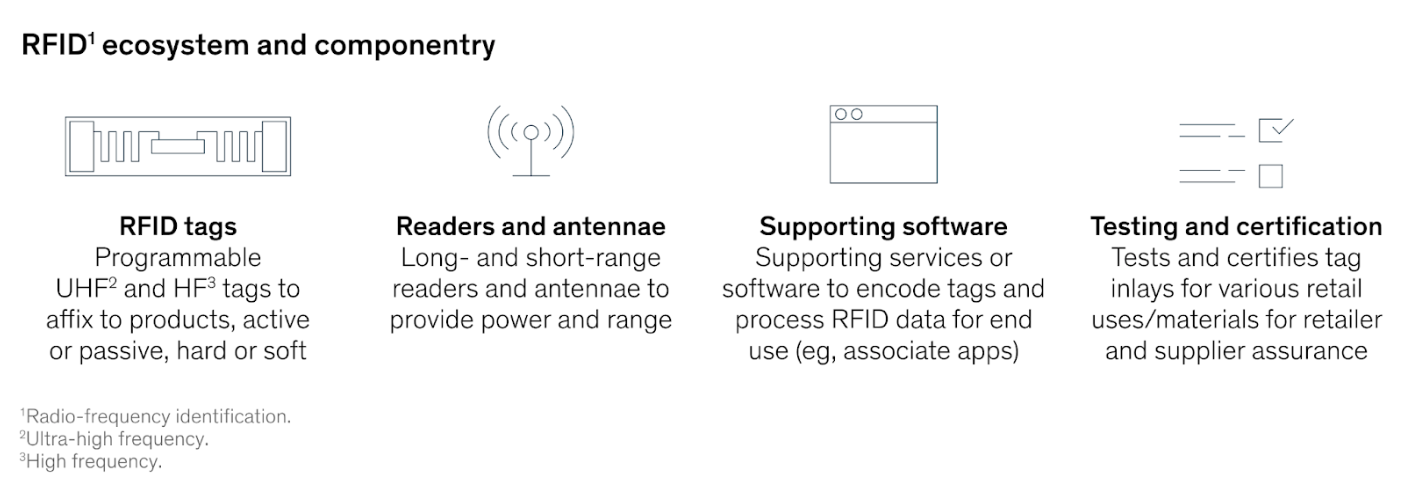 Source: McKinsey
Customer Experience Enhancement
IoT makes it easier to personalize shopping. Beacons can tell when a customer who has opted-in walks into the store and can send a discount code straight to their phone. Heat mapping shows which parts of the store people visit most, revealing customer behavior patterns that help managers decide where to put products. Smart fitting rooms can even suggest a shirt that would look good with the pants a shopper wore in. Salesforce data shows that 56% of shoppers now expect offers to be personalized. A study by Twilio Segment found that 49% of people said they would likely come back to a store if the experience felt personal. Digital signage and interactive screens can also boost customer engagement, with Wavetec reporting a 60% increase. Amazon Go stores are an advanced example of this, using sensors to let people shop without a checkout line. These smart stores showcase where smart retail is heading. But even smaller things, like digital price tags that show personalized prices or mobile payment apps that help you find an item, make shopping better.Loss Prevention and Security
Losing products to theft or damage has a significant financial impact. The National Retail Federation said shrink cost the retail sector $112.1 billion in 2022, up from $93.9 billion the year before. Theft makes up about two-thirds of that total. IoT helps stop this in a few ways. RFID tags track expensive items in real-time, so it’s obvious if something disappears. AI cameras can spot suspicious behavior as it happens. Special reports can also flag strange transactions that might mean an employee is stealing. Retailers using these advanced tags see about 18% less shrink every year.Supply Chain Visibility and Energy Management
This technology works outside the store, too. Effective supply chain management depends on real-time data. IoT sensors can track a product from the distribution center to the shelf, check the temperature for food, and give a more accurate arrival time for trucks. Route optimization technology helps deliver goods more efficiently. Warehouse automation further streamlines this process. When you know exactly when a delivery is coming, you can make sure you have enough people ready to unload it. This level of supply chain visibility streamlines supply chain operations and improves overall efficiency. Saving energy is another big plus. Stores spend a lot of money on lights, AC, and refrigerators. IoT systems can cut energy use by 10-30% in commercial buildings. Smart thermostats can change the temperature based on how many people are in the store, and lights can dim when there is plenty of sunlight. One Spanish University found that IoT saved up to 70% on power for heating and cooling systems.The Business Case: Benefits of IoT in Retail
Understanding how the tech works is one thing, but seeing how it pays off is another.Operational Cost Reduction
Savings come from a lot of different places. You reduce labor costs when inventory counts that used to take days now take a few hours. Energy bills go down when the store manages itself. You don't have to keep as much "safety stock" because your numbers are more accurate. Lowering theft also helps margins. Together, these improvements drive significant gains in operational efficiency. McKinsey’s research shows some clear numbers: over 25% better inventory accuracy, a 1-3.5% increase in full-price sales because items are actually in stock, and a 10-15% drop in the hours employees spend on inventory tasks.Enhanced Decision-Making Through Data
The biggest benefit might be moving from reacting to problems to stopping them before they happen. When you see shopping patterns as they occur, you can move staff to the registers before the lines get too long. If you see a product selling fast, you can order more before you run out. If a fridge starts malfunctioning, you can fix it before it breaks and the food spoils—a capability known as predictive equipment maintenance. This is where big data really helps. The data itself isn't the prize; the prize is being able to make better choices, faster.Competitive Advantage
The retailers who do the best job on the ground are the ones who win. If your online pickup is reliable because your inventory is right, people will trust you more. If your stores are comfortable because the temperature is managed well while you're also saving money, you’re doing better than the competitor who is still adjusting a thermostat by hand. For brick-and-mortar retailers, these advantages can be the difference between thriving and falling behind. NVIDIA’s "State of AI in Retail" report found that 69% of retailers saw more revenue after using AI (which uses IoT data), and 72% saw their operating costs go down. The ability to gain valuable insights from customer data gives these retailers a significant edge.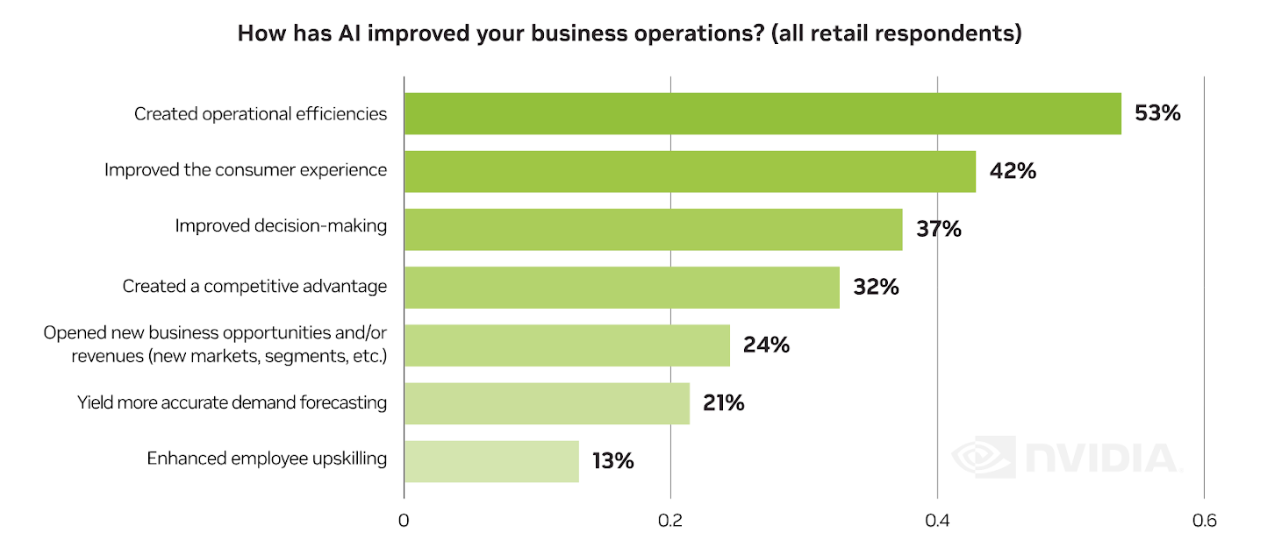 Source: Nvidia
Implementation Considerations
Starting with retail IoT isn't just about buying some gadgets and plugging them in. It takes a lot of planning to get it right.Integration with Existing Systems
IoT tools have to talk to the systems you already use, like your checkout software, your warehouse management, and your customer databases. This is where a lot of companies run into trouble. You often need special software (APIs or middleware) to bridge the gap. The goal is to have one platform where data flows everywhere. When someone buys a shirt, the inventory should update everywhere instantly. If stock gets low, the system should order more on its own. Getting this to work usually requires building custom software to tie everything together.Data Security and Privacy
More connected IoT devices mean more ways for hackers to try to get into your system. Retailers have to use strong data security measures, like encrypted messages and regular software updates. Any customer data you collect also has to follow privacy laws like CCPA or GDPR. Keeping customers' trust means being open about what sensitive data you are taking and why. Letting people opt-in for tracking and having a clear privacy policy isn't just about following the law; it's good for business.ROI and Budget Planning
IoT costs money upfront for the hardware and the setup. To make a business case, you need to pick a specific problem you want to solve and figure out how much money solving it will save you. It is usually best to start with a pilot program. Try it in one store or for one specific task, like tracking high-theft items. Once you prove it works and saves money, you can roll it out to more locations.Choosing the Right Approach
Some stores buy ready-made solutions from vendors. Others need custom systems that fit their specific way of working. The right choice depends on how unique your needs are and if the standard tools can actually do what you want. Cloud partners like AWS can help with the heavy lifting of storing and processing all that information.Looking Ahead: Future Trends
A few big shifts are coming for IoT technology in the retail sector.AI and Machine Learning Integration
IoT data gets much more powerful when you use artificial intelligence. Predictive software can guess what people will buy better than old methods. AI cameras can recognize products and analyze customer behavior. Systems can even make decisions on their own much faster than a person could. Mixing IoT data with things like generative AI opens up even more doors, like giving customers better recommendations or changing prices automatically based on customer demand.Edge Computing
Processing data "at the edge" means it’s processed on either the device itself or on a local server instead of sending it to a distant cloud, which makes things faster. If a customer needs a personalized offer on their phone based on exactly where they are standing, they can't wait for the data to travel across the country and back. Edge computing makes those responses happen instantly.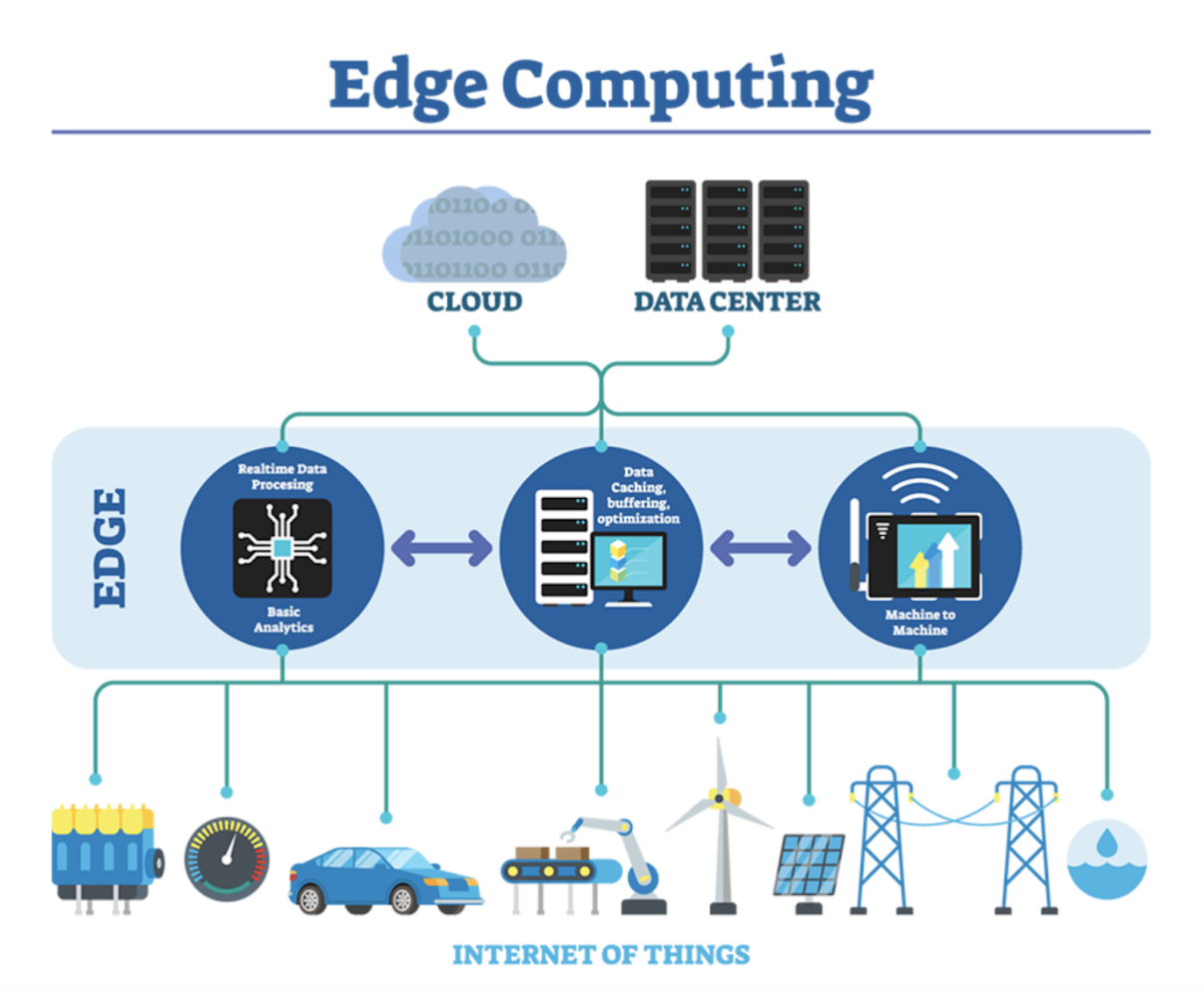 Source: Ebyte
If you plan to add AI to your retail IoT systems, our AI Consulting services can help assess sensor data readiness and prioritize forecasting or automation use cases with measurable business value.
Source: Ebyte
If you plan to add AI to your retail IoT systems, our AI Consulting services can help assess sensor data readiness and prioritize forecasting or automation use cases with measurable business value.
Sustainability Initiatives
Monitoring the environment and cutting waste fits right in with company goals to be "green." IoT helps retailers measure exactly how much energy or waste they are producing. Whether it's fixing a broken fridge to save food or turning off lights to save power, this tech helps the planet and the budget at the same time.How Kanda Can Help
Setting up IoT in a store takes experience with hardware, software, and data. Kanda has spent decades building tech for complicated businesses, including IoT projects for shipping and logistics. We can help you:- Look at your business to see where IoT would actually be worth the money
- Design a system that works with the software you already have
- Build custom apps that turn data into useful instructions
- Set up AI and analytics to get the most out of your information
- Make sure your system is secure and can grow as your business grows
Conclusion
IoT isn't just an idea anymore. It provides real, measurable results in inventory, customer service, and cost-cutting for retail businesses who take the time to do it right. IoT technology solves a classic problem: retail creates a massive amount of data, but it used to be almost impossible to catch and use that data in real-time. IoT changes that by giving managers a constant, clear view of everything happening in their stores. However, success takes more than just buying sensors. It requires a solid data plan, good data security, and making sure the tech actually helps you reach your business goals. Retail companies who treat IoT as a core part of their strategy, rather than just a few novel devices, will get the most out of it. The retail market is moving fast. Customers expect you to have what they want, when they want it, with a personal touch, and customer satisfaction increasingly depends on meeting those expectations. Pressures from theft, labor costs, and energy costs aren't going away. For brick and mortar stores that want to stay competitive, IoT provides the view they need to keep up.Related Articles
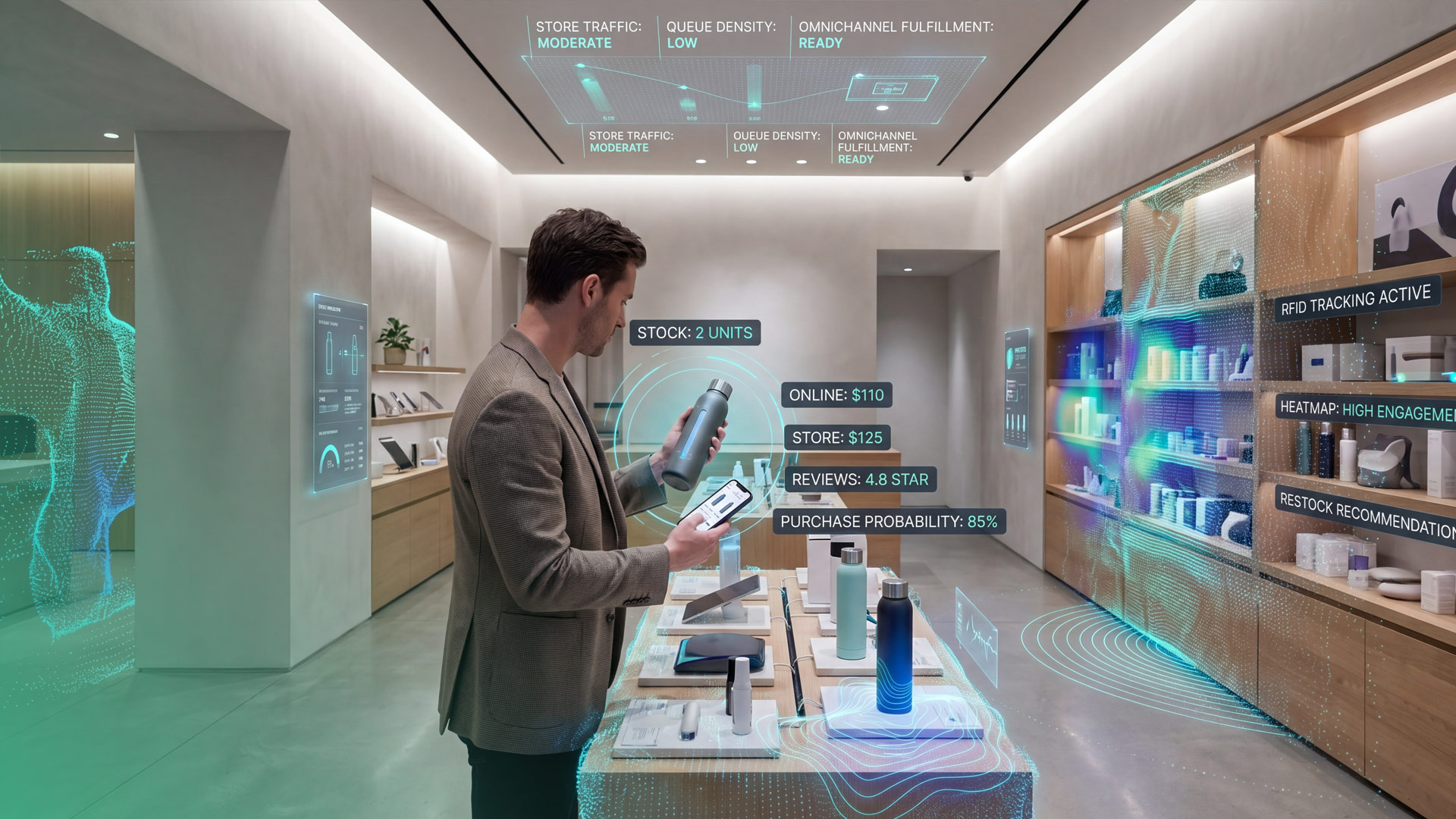
5 Technological Pillars of Real-Time Retail
Key Takeaways: Real-time retail depends on reducing the delay between what happens in the business and how quickly teams can act on it. AI, IoT, RFID, mobile, omnichannel systems, and retail media work best when they are connected through shared data, not treated as separate projects. Inventory visibility is often the best starting point because…Learn More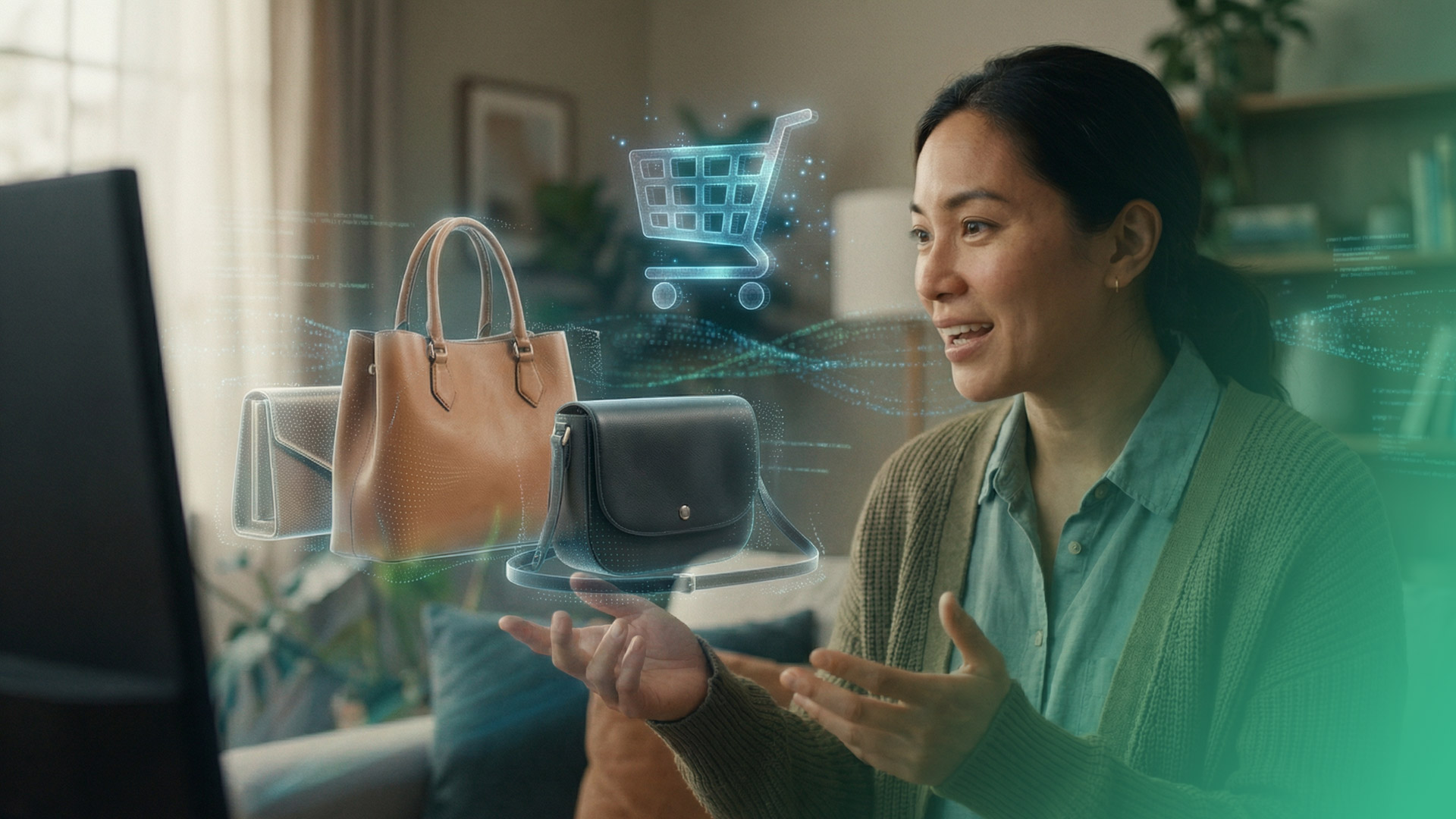
Increasing Conversions and User Engagement in Retail With Conversational AI
Key Takeaways: Shoppers who interact with AI are almost four times more likely to buy, and proactive AI recovers around 35% of abandoned carts. Conversational AI has moved well beyond chatbots – now helps people find products, guides purchases, generates content, and handles service across every channel. Agentic AI goes a step further, managing returns,…Learn More
How Big Data Analytics is Transforming the Customer Experience for Online Retailers
Online retail is becoming increasingly competitive. Customers can shop anywhere they want, and they expect their experience to be smooth, personal, and easy to navigate. Every click, every transaction, every interaction generates data. And retailers are drowning in it. That flood of data creates problems, but it also creates opportunities. The retailers who know how…Learn More
Transforming Retail and Consumer Packaged Goods (CPG) with Generative AI
With a high level of competition, lower R&D budgets compared to other industries, and the constant need to produce new goods, the retail and consumer packaged goods (CPG) sector is challenging to innovate within. However, the rapid evolution of generative AI is impacting all industries, including retail and CPG, demonstrating that early adoption of innovation…Learn More