

The Digitally Mature Nonprofit: Leveraging AI Tools for Fundraising Success
If you work in the nonprofit sector, you've probably noticed something: there's a growing gap between organizations that simply use digital tools and those that are truly "digitally mature." Only 12% of nonprofits globally are considered digitally mature—yet these organizations are 4x more likely to achieve their mission goals and 2x more likely to exceed their fundraising targets. Many nonprofits have moved their records into digital format, but real digital maturity means something more. It's about changing the core way the technology helps your organization achieve its mission. And here's why that matters for your fundraising strategy: digital maturity goes far beyond tracking donations in spreadsheets. It matters because static spreadsheets can only tell you what happened in the past, whereas a mature digital system can predict what will happen next. By moving from simple record-keeping to intelligent systems, you gain the ability to foresee donor behavior and automate the right task at the right time, turning your data from a passive archive into an active engine for revenue growth.
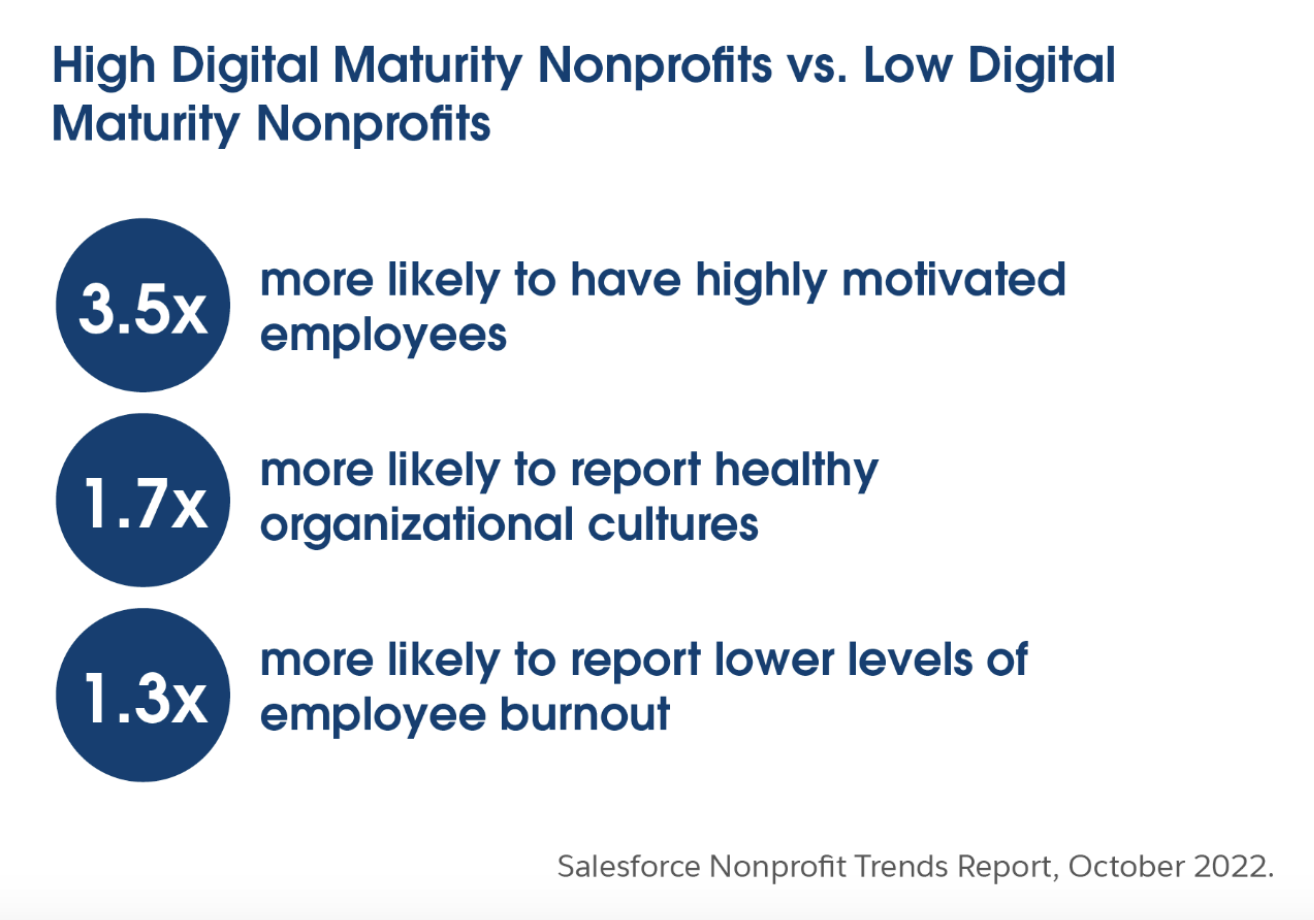 Source: Salesforce
Understanding Digital Maturity in Nonprofit Organizations
Watch how a nonprofit uses technology, and you'll see where they are on the digital maturity journey. It's not something you have or don't have—most organizations sit somewhere along a spectrum of four distinct stages:- Stage 1: Analog & Ad-Hoc
- Characteristics: Operations rely heavily on manual data entry, paper files, and disconnected spreadsheets. Institutional knowledge stays in people's heads, not systems.
- Tech Stack: Excel, physical filing cabinets, personal email accounts.
- Stage 2: Defined & Functional
- Characteristics: Basic digital tools are in place to handle specific tasks, but they don't talk to each other. You have a database, but it doesn't sync with your email tool.
- Tech Stack: Standalone CRM (e.g., Little Green Light), Mailchimp for emails, QuickBooks for finance—all separate.
- Stage 3: Integrated & Aligned
- Characteristics: Systems are connected. Data flows automatically between fundraising, marketing, and finance. You have a "single source of truth" for donor data.
- Tech Stack: Salesforce NPSP or HubSpot with native integrations, automated email workflows, and dashboard reporting.
- Stage 4: Optimized & Intelligent
- Characteristics: Technology actively drives strategy. AI and predictive modeling anticipate donor needs before staff even spot them.
- Tech Stack: AI-driven analytics (like Dataro or DonorSearch AI), predictive modeling tools, and dynamic content personalization engines.
- 92% of nonprofits say they don't feel ready for AI
- 60% are unsure or distrustful of AI technology
- 76% of nonprofit organizations do not have a written AI policy
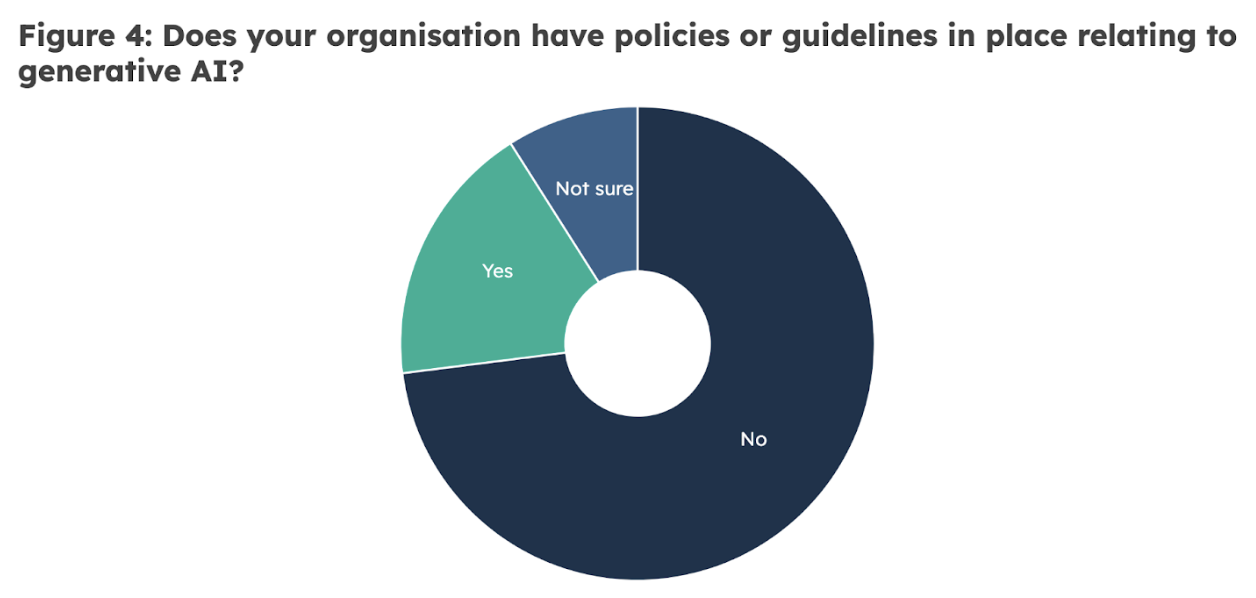 Source: JRF
Even with these concerns, the direction is obvious: groups that close this readiness gap are finding they are much better prepared to handle the challenges of today's fundraising.
Source: JRF
Even with these concerns, the direction is obvious: groups that close this readiness gap are finding they are much better prepared to handle the challenges of today's fundraising.
Why Digital Maturity Matters for Fundraising Success
It's now very clear that digital ability is linked directly to fundraising results. Moving up the maturity ladder doesn't just make life easier for your staff; it directly impacts your bottom line by unlocking capabilities that manual systems simply cannot match:- Precision Donor Targeting: Instead of "spray and pray" mass emails, mature systems allow you to segment audiences by interest, giving capacity, and engagement level.
- Hyper-Personalization at Scale: You can treat 10,000 donors like major gift prospects by automating personalized messages based on their exact history and preferences.
- Increased Retention: Automated systems catch "at-risk" donors before they churn by flagging lapses in engagement early.
- Data-Driven Decision Making: Strategy shifts from "we think this will work" to "the data proves this works," minimizing the risk of failed campaigns.
The Role of AI Tools for Fundraising in Modern Nonprofits
While generative AI creates content, predictive AI acts as your data scientist. By analyzing vast amounts of historical data, these tools look for subtle signals that human eyes often miss. Specifically, these models analyze data points such as Recency, Frequency, and Monetary (RFM) value, alongside interaction data like event attendance, email open rates, and website visit duration. By correlating these patterns, the AI can predict future outcomes with high accuracy, such as:- Churn Risk: Flagging donors who are showing subtle signs of disengagement.
- Ask Readiness: Determining the exact "smart ask" amount a specific donor is most likely to accept based on their spending power and past behavior.
- Propensity to Upgrade: Identifying annual fund donors who exhibit the behavioral traits of major gift prospects or legacy pledgers.
Generative AI: Making Content Creation Easier
Generative AI tools have really simplified creating quality content. Tools like ChatGPT, Gemini, and Microsoft Copilot are now go-to resources for writing fundraising emails, social media posts, and campaign materials. The efficiency gains are pretty impressive. Recent reports show that 28% of marketers are using generative AI to write emails, and they're seeing a 13% boost in click-through rates. Nonprofit professionals are putting these tools to work for:- Grammar checking
- Headline suggestions
- Campaign brainstorming
- Drafting initial content
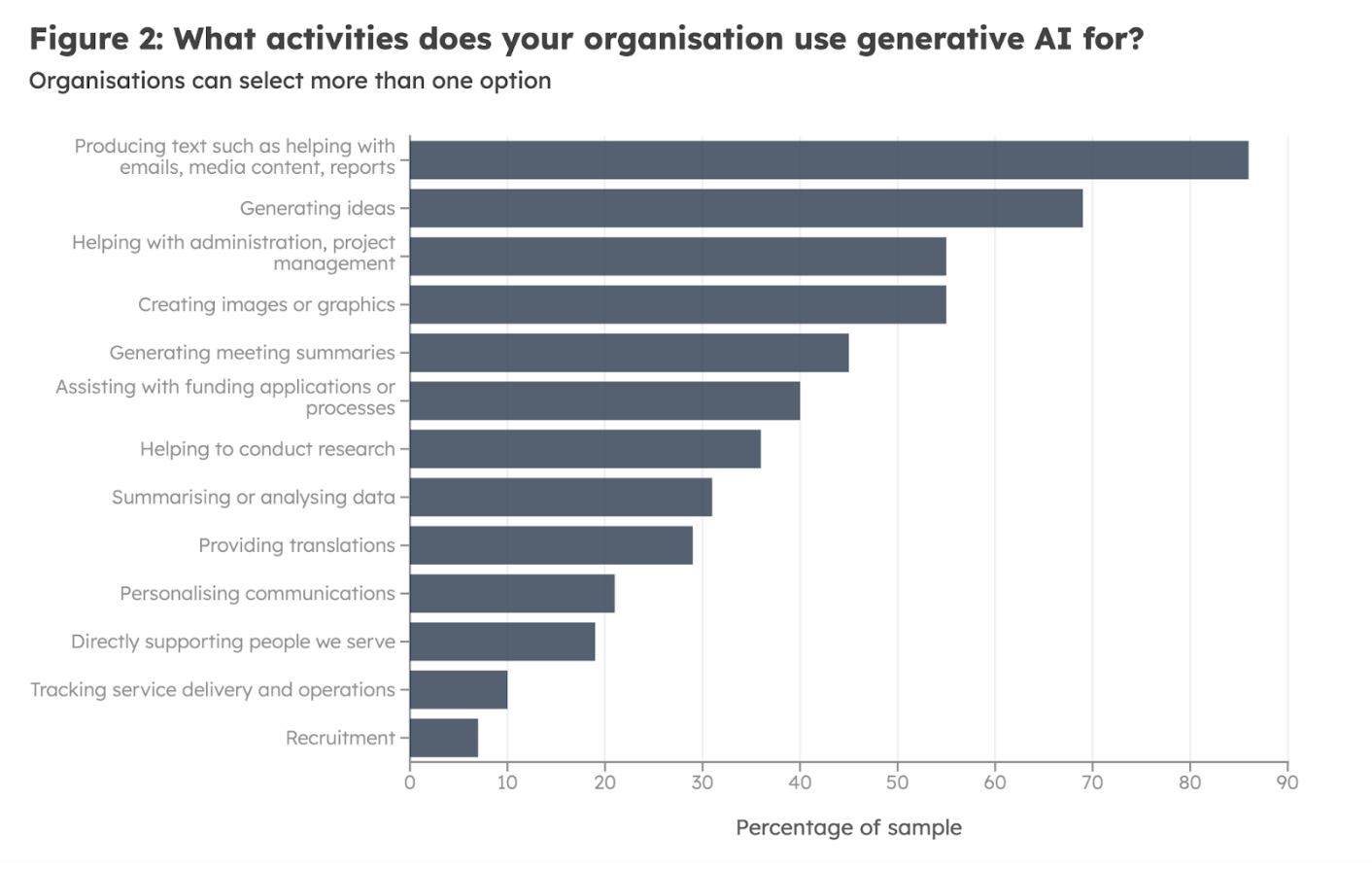 Use of generative AI by non-profit organizations. Source: JRF
Predictive Analytics: Understanding How Donors Behave
To put these insights into practice, organizations rely on AI platforms such as DonorSearch AI and Dataro connect with CRM solutions to provide this depth of knowledge. The prospects most likely to become donors rise to the top of your outreach list automatically. Advanced algorithms process financial metrics and donation history in the background, so your fundraising team knows exactly where to focus their effort. Statistics show that 13% of nonprofits are already using predictive analytics software to find new donor prospects.Automation and Intelligent Task Management
Modern AI handles the routine work really well. We're talking data entry, sending donor thank-yous, managing event sign-ups. Some organizations are saving 40% of their admin time this way. This change allows your staff to put more energy toward the most important things: building relationships and stewarding current donors.Data Infrastructure: The First Step to AI Success
Here's something many nonprofits learn the hard way: artificial intelligence is only as effective as the data it has to process. If your data structure is poor, even the best AI tools for fundraising won't get good results.Moving from Spreadsheets to Integrated Data Systems
Many nonprofits still struggle with scattered nonprofit data, where information is spread across multiple spreadsheets or systems that don't connect. To reach digital maturity, your organization must move toward centralized CRM systems or data warehouses that offer one definitive source of truth. For larger organizations dealing with huge amounts of data, the way the data is structured becomes even more critical. Deciding how to organize this data is a complicated strategic decision. For a closer look at modern data structures, you can check out the differences in our article on Data Lake vs. Data Mesh, which explains how decentralized data management can support growth.Ensuring Data Quality and Governance
Your donor data has to be reliable. Clean it up, remove duplicates, and keep it consistent. Since 70% of nonprofit professionals are concerned about data privacy and security, you'll want solid access controls and clear data practices—similar to HIPAA standards.A Strategic Roadmap for Digital Maturity Implementation
Achieving digital maturity requires a holistic approach that connects strategy, culture, and execution. Whether you are fixing a data bottleneck or adopting predictive AI, successful implementation generally follows three phases: assessing readiness, building culture, and executing quick wins.Assessing Your Organization's Digital Readiness
Before committing to new robust tools, nonprofit leaders should review their current situation. Frameworks like the Digital Nonprofit Ability (DNA) assessment help organizations judge their readiness across key areas:- Mindset: Is leadership and the board willing to embrace innovation and change?
- People: Does the staff possess the necessary digital literacy and training?
- Process: Are workflows automated and efficient, or stuck in manual bottlenecks?
- Technology: Is the current software stack integrated, or made up of disconnected tools?
- Data: Is your information accurate, secure, and accessible across the organization?
- Investment: Is there a dedicated budget and a clear understanding of the ROI for digital tools?
Building Leadership Support for AI Investment
Successful implementation depends on support from the top. Leaders must be able to show the ROI and connect technology spending directly to achieving mission goals. This is often a source of tension; 88% of nonprofits find it hard to fully integrate technology because of budget issues and cultural resistance within the organization. Overcoming this requires clear implementation roadmaps and effective strategies for managing organizational change.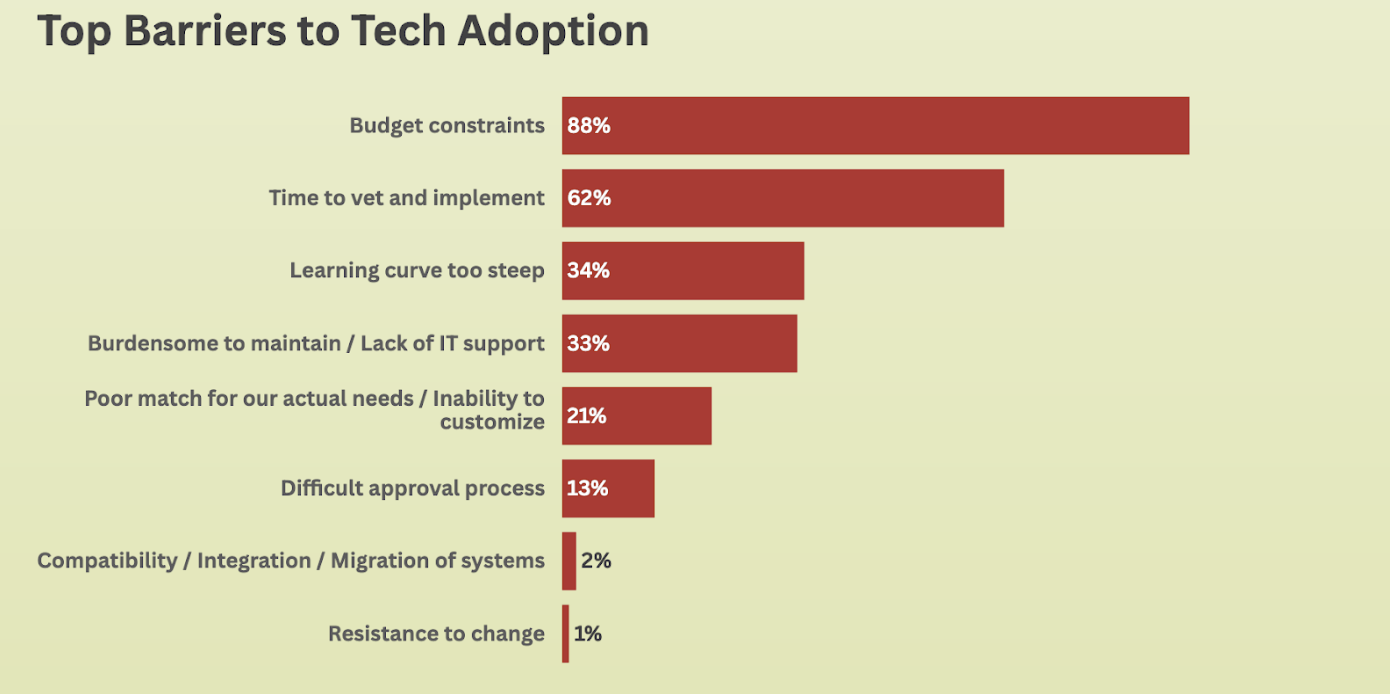 Source: Philanthropy
Selecting the Right Tools for Your Fundraising Goals
Decision-makers should find technology solutions for specific problems instead of chasing trends. Whether the problem is donor retention, speeding up gift processing, or improving prospect research, the chosen AI solution must meet the need. Considerations must include how well the tool can connect with existing tools and legacy systems, as well as the full cost of ownership. Our AI Consulting services help nonprofits match fundraising priorities to feasible AI use cases, assess donor data readiness, and build an implementation plan that fits their budget and mission.Practical Applications: AI for Nonprofits in Action
The concept of nonprofit digital transformation is best understood by looking at real applications. Let's look at how these innovative solutions create measurable results.Improved Prospect Research and Donor Identification
AI models can process over 800 data points to find prospective donors and major donors who might otherwise be missed. Tools like DonorSearch AI use web analytics and analyze financial screenings and giving history to help organizations increase their pipeline for major gifts. By automating this research, development teams can spend their time on building relationships rather than just finding potential donors.Personalized Donor Engagement at Scale
Personalization is often limited by how much staff can handle, but AI changes this. AI-powered segmentation can determine communication preferences and the best time for outreach. The financial effect is clear: the average gift size for one-time donations made through forms that use AI (without using personal identifying information) is $161, compared to the industry average of $115.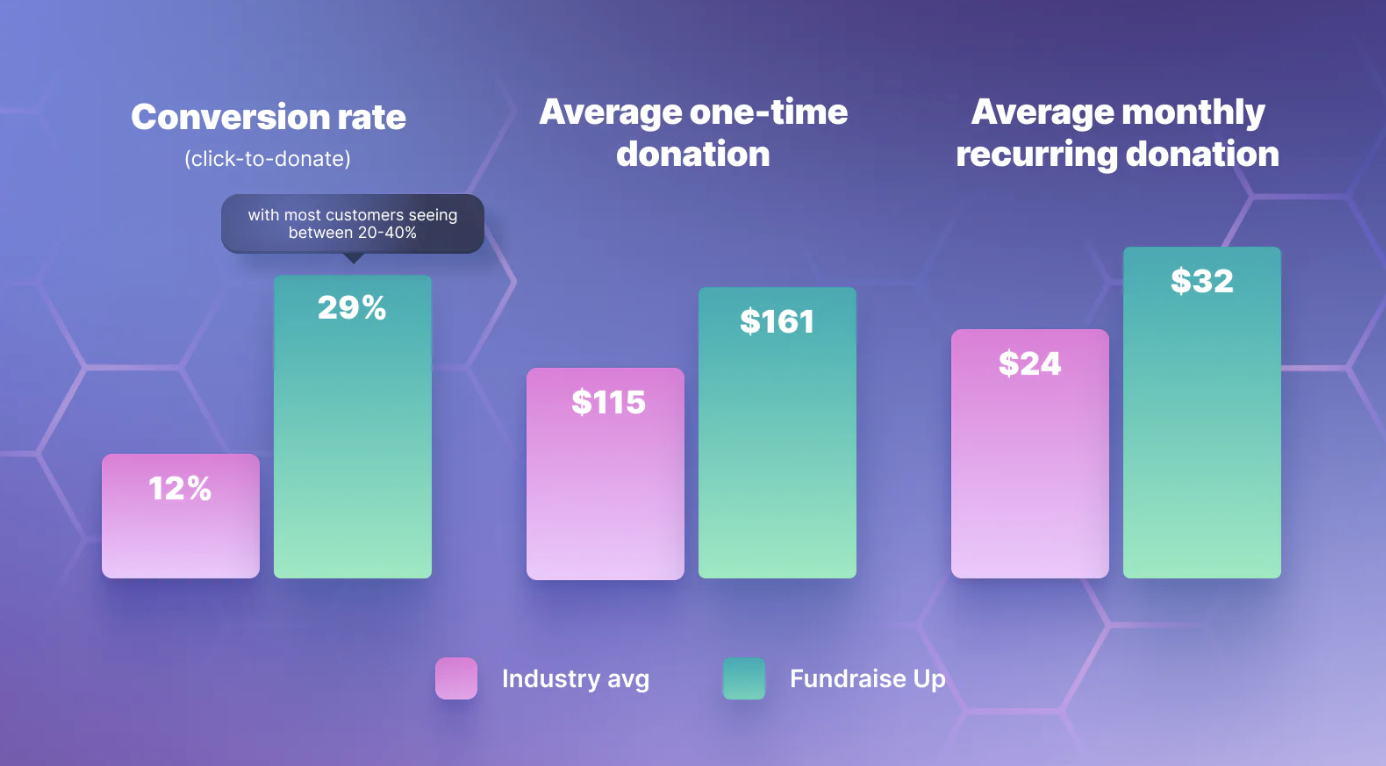 Source: FundraiseUp
Intelligent Campaign Optimization
AI lets you track performance in real-time and run A/B tests automatically. The American Cancer Society used machine learning to figure out which digital ads were bringing in the most money—and ended up with donation revenue 117% above their goal. This kind of modeling is not unique to fundraising; similar methods are used to predict outcomes in complicated sectors. For instance, similar principles are at work when looking into predictive modeling in healthcare, showing how versatile these algorithmic approaches are.Automated Grant Writing and Reporting
Grant applications have historically been very time-consuming. New AI tools help by researching engagement opportunities and creating the first draft of grant proposals. Solutions like Grant Assistant let users finish proposals up to three times faster than usual. While human review remains necessary for customization, the time savings are significant—allowing organizations to save time and focus more resources on their core nonprofit work.Nonprofit Digital Transformation: Building a Data-Driven Culture
Technology alone cannot create change; the organizational culture and processes must evolve along with it.Training Teams to Work Alongside AI
There's a pretty big skills gap in the sector right now. Reports by Google show that 40% of nonprofits say nobody on their team has any formal education in AI. Even more telling: 69% of nonprofit marketers who are already using generative AI haven't had any official training on it. This is why investing in data literacy and AI skills matters so much. When your team understands how these tools work, they can better interpret what the AI is suggesting and make smarter decisions. If your organization is looking to bridge this gap, Kanda's AI services can provide the infrastructure and expertise your team needs to get up to speed.Balancing Automation with Human Connection
A major concern for 63% of fundraisers is that using generative AI for donor communications might feel less personal. It's important to remember that responsible AI makes relationship fundraising possible; it doesn't take its place. Automation should manage the routine tasks, freeing up staff capacity for the high-touch stewardship that creates long-lasting donor loyalty, whether that's through direct mail, in person events, or personalized outreach.Your Path to Digital Maturity
For nonprofit leaders ready to start their digital transformation journey, the path begins with quick, easy wins. Here are some immediate chances to build momentum:- Implementing basic donor segmentation using data analytics
- Automatically sending thank-you emails to improve donor engagement
- Using free generative AI tools for content drafting
When to Partner with Technology Experts
While some tools are simple to use, others need specialized expertise. When you need custom AI models, complex integrations, or secure data systems, it's smart to bring in outside help. Working with software developers who know the nonprofit world can speed things up and reduce risks. If you need a solution built specifically for your organization, Kanda's custom software development services offer the technical expertise to handle complex digital transformations.Overcoming Common Challenges in AI Adoption
Budget Constraints and Cost-Effective Solutions
Budget is always a worry, but there are affordable options. Many organizations start with free or low-cost tools like ChatGPT, Gemini, or Canva's AI features. When figuring out the ROI, organizations should compare the cost of the tools against the staff time saved and the increase in revenue. For example, cutting mailing costs through better targeting.Integration with Legacy Systems
Many nonprofits use old technology, making integration a challenge. Methods such as API development and middleware solutions can bridge the space between legacy systems and modern AI tools. It is often necessary to establish a solid technological base before trying to adopt AI at an advanced level.Security and Compliance Considerations
With 41% of NGOs having experienced cyber attacks in the last three years, security must not be overlooked. Following frameworks like GDPR and CCPA is mandatory when handling donor data. Implementing encryption, access controls, and transparent data practices is vital to maintaining donor trust and ensuring data privacy.The Future of AI-Powered Fundraising
Nonprofit data analytics is heading toward deep learning algorithms that identify intricate connections across data sources, moving beyond basic machine learning. This improves predictions about complex donor behaviors like multi-year giving patterns and legacy gift potential. Natural Language Processing (NLP) will play a bigger role too, extracting sentiment and engagement indicators from unstructured data—emails, event notes, and more—to deliver valuable insights. Integrated AI ecosystems are the growing trend, where donor management, marketing, and financial systems link seamlessly through API-first frameworks, allowing nonprofits to collect and analyze data far more effectively than ever.Real-World Success
While fundraising is often associated with front-end campaigns, true digital maturity often happens in the backend infrastructure. A compelling example of this is a recent project involving a global nonprofit platform dedicated to connecting donors with local organizations worldwide. This organization manages 37,000 projects across 175 countries and has raised close to $1 billion. However, their ability to fundraise was threatened by a massive data bottleneck. Their data regarding local nonprofits was often stale—no country's data had been fully updated in 90 days—and their importers were prone to crashing. Kanda transformed their API and data architecture with measurable results:- Speed: Data import times dropped from 4-5 days to just 4-6 hours.
- Scale: Gathering data for all countries went from 4.5 months to roughly 120 hours.
- Impact: An always-current database meant corporate partners could integrate donation options into their apps, directly funding grassroots organizations.
How Can Kanda Help?
Kanda helps nonprofits manage the complexity of digital transformation with confidence. Our expertise makes sure your organization maximizes the potential of AI while keeping your data secure and whole.- Custom AI & ML Development: We build tailored algorithms that analyze your specific donor data to predict giving behaviors and optimize campaigns.
- Data Integration & Architecture: We help you combine scattered data, moving old systems to modern cloud infrastructures like Data Lakes or Mesh architectures.
- Security & Compliance: Our team puts in place strong security protocols to protect sensitive donor information, ensuring compliance with global data regulations.
- Strategic Implementation: We partner with you to align technology with your mission, ensuring sustainable adoption and ROI.
Final Thoughts
Nonprofits can't afford to ignore digital transformation and AI anymore. They help you identify high-value donors and personalize your outreach at scale which is essential for long-term growth. It takes time to get fully there, but you can make meaningful progress right now, wherever you're starting from.Related Articles

4 Ways Nonprofits Can Benefit from Data Automation
Data can be either your greatest ally or a heavy burden that holds you back. For nonprofits, the stakes are even higher. Whether it’s donor information, volunteer or student data, or internal records, effectively managing this data is crucial for your day-to-day operations. And automation is the tool that can transform your data into the…Learn More
The Power of Web-Based Donation Collection Software for Nonprofits
With $319 billion donated by American individuals in 2022 and 60% of American households engaged in charitable activities, the role of fundraising organizations cannot be stressed enough. However, the average bounce rate for nonprofit organizations’ websites in the USA is 60%, and around a third of nonprofits worldwide have experienced cyberattacks. What do these numbers…Learn More
Product Development for Nonprofits: Creating Multifunctional Solutions for a Better Future
The fifth edition of the Salesforce Nonprofit Trends Report states, “digital transformation is defined as the integration of digital technology into all areas of an organization, fundamentally changing how the organization operates.” The report also states that while 74% of nonprofits believe digital transformation is essential, only 12% have actually reached digital maturity. Why is the latter…Learn More