

April 15, 2026
Insurance and Legal
How AI Is Changing Insurance App Development Services: Real Examples and Practical Tips
Key Takeaways:
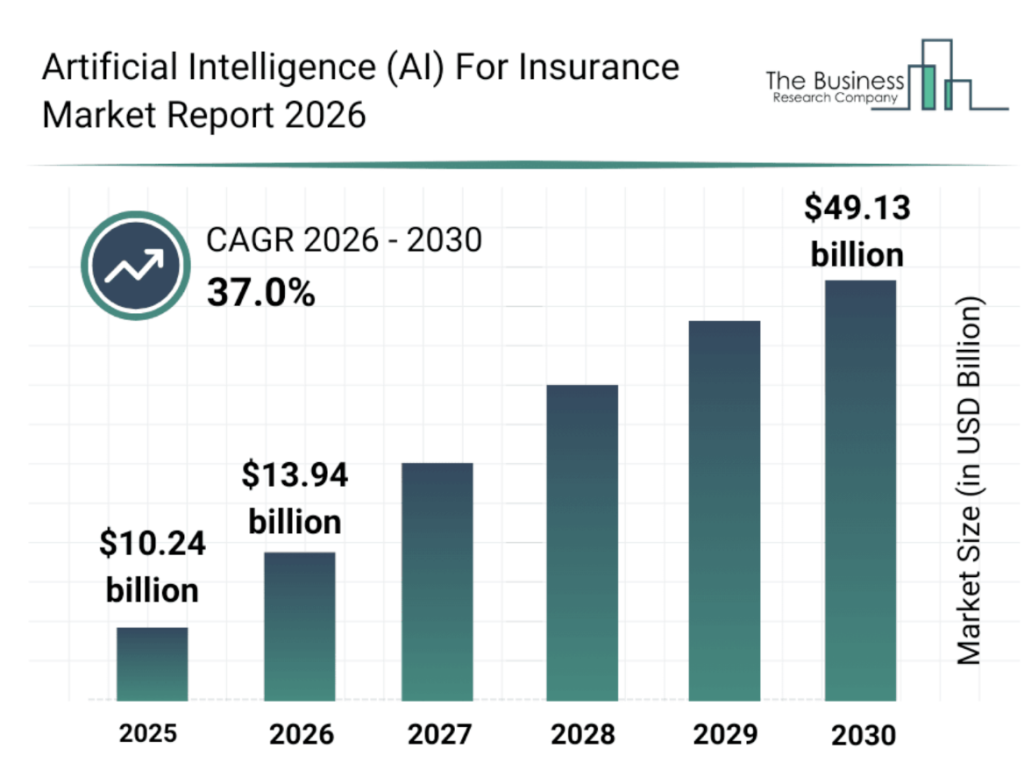 Source: The Business Research Company
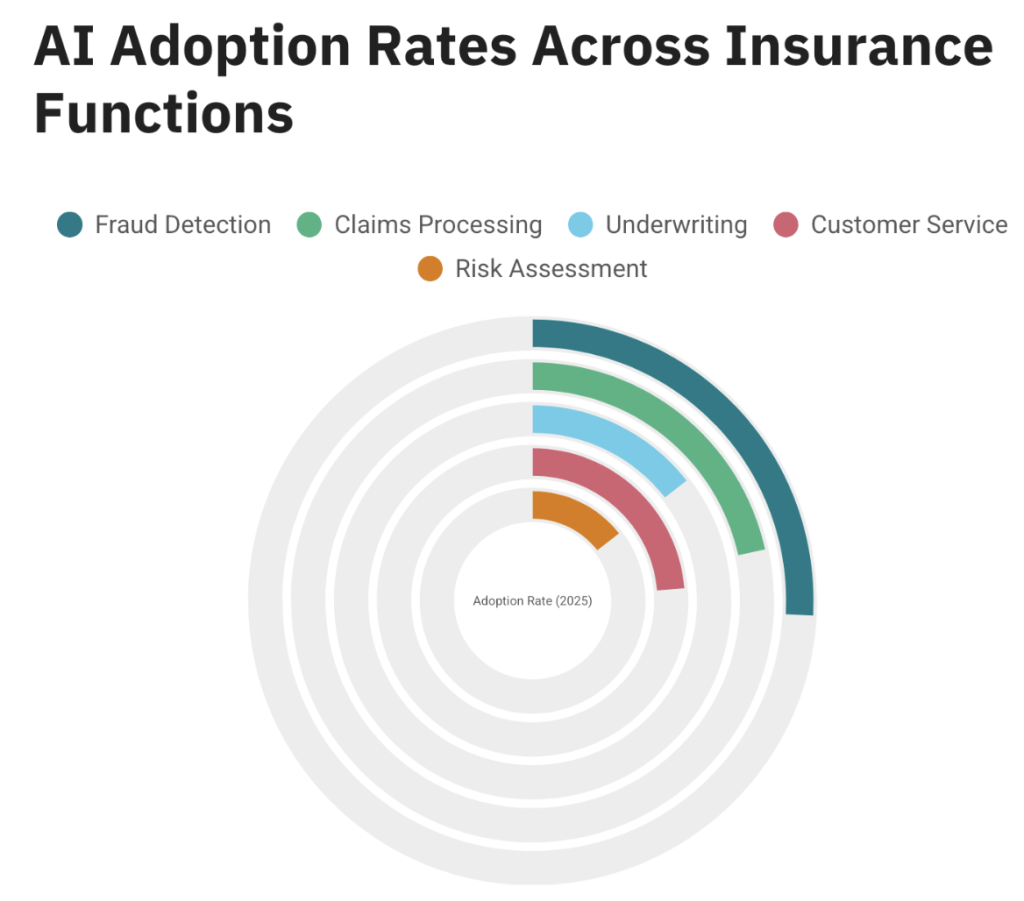 Source: AllAboutAI
 The AI model development phase deserves special attention. Insurance-domain datasets are hard to come by and expensive to label. A model trained on generic data will underperform in production, so you need a team that understands both the ML side and the insurance domain well enough to source, clean, and validate the right training data. This is why healthcare software development trends increasingly favor specialized development partners over general-purpose firms.
Beyond the standard development phases, there are a few AI-specific implementation practices that often get overlooked but make a big difference:
The AI model development phase deserves special attention. Insurance-domain datasets are hard to come by and expensive to label. A model trained on generic data will underperform in production, so you need a team that understands both the ML side and the insurance domain well enough to source, clean, and validate the right training data. This is why healthcare software development trends increasingly favor specialized development partners over general-purpose firms.
Beyond the standard development phases, there are a few AI-specific implementation practices that often get overlooked but make a big difference:
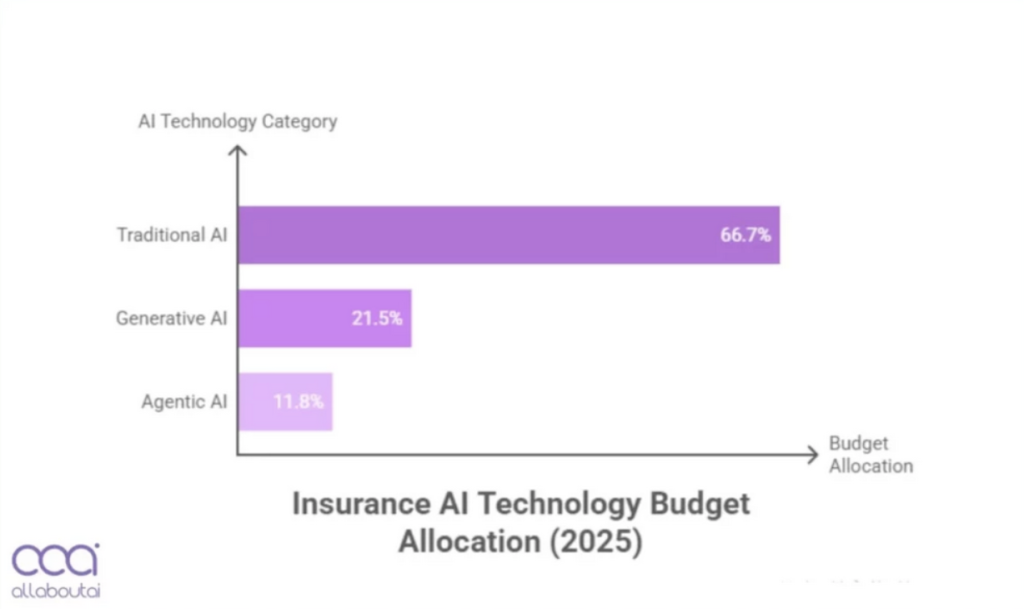 Source: AllAboutAi
IoT integration. Connected homes and vehicles are generating real-time insurance data that feeds directly into underwriting and claims models. Telematics-based pricing in car insurance apps is already mainstream; expect the same approach to expand into property insurance apps and health coverage, where wearable data and smart home sensors create new risk profiles.
Generative AI for policy documents. Policy language is dense and repetitive, exactly the kind of content generative AI handles well. Expect to see AI-generated first drafts of policy documents, coverage summaries, and client communications become standard tooling.
Cyber insurance powered by AI. As AI-related threats grow, so does demand for cyber insurance. According t o Insurance Business Mag, SME adoption of cyber insurance has surged 50%, and insurers are increasingly using AI in cyber underwriting to simulate attack scenarios and model financial impact. For fintech and insurance app developers, this is a fast-growing segment.
Source: AllAboutAi
IoT integration. Connected homes and vehicles are generating real-time insurance data that feeds directly into underwriting and claims models. Telematics-based pricing in car insurance apps is already mainstream; expect the same approach to expand into property insurance apps and health coverage, where wearable data and smart home sensors create new risk profiles.
Generative AI for policy documents. Policy language is dense and repetitive, exactly the kind of content generative AI handles well. Expect to see AI-generated first drafts of policy documents, coverage summaries, and client communications become standard tooling.
Cyber insurance powered by AI. As AI-related threats grow, so does demand for cyber insurance. According t o Insurance Business Mag, SME adoption of cyber insurance has surged 50%, and insurers are increasingly using AI in cyber underwriting to simulate attack scenarios and model financial impact. For fintech and insurance app developers, this is a fast-growing segment.
- AI adoption among insurers surged nearly 100% year-over-year in 2025 - 34% have now fully integrated AI into their business value chain, and 90% are somewhere on the adoption path, according to Conning's annual survey.
- The highest-ROI AI use cases in insurance are claims automation (59% faster resolution, 33% lower admin costs), fraud detection (92-98% accuracy with behavioral analytics), and customer service automation (up to 50% of queries handled without a human agent).
- NAIC AI governance requirements, now adopted by 23 states, mandate audit trails, bias testing, and written AI governance programs. Colorado requires annual compliance reporting starting July 2026. Explainability isn't optional - it's a regulatory requirement.
- Sourcing, labeling, and validating industry-specific training data is one of the most underestimated costs in insurance app development.
- AI needs to be built into the architecture from the start — retrofitting legacy systems almost never works.
- Build a feedback loop from day one or your model will drift as claim patterns, regulations, and customer behavior change.
Source: The Business Research Company
Why Insurance Companies Are Investing in AI-Driven Apps
Customers Expect Personalized, Always-On Service
Insurance customers already use mobile apps to manage insurance policies, check coverage, and submit documents. And they also expect those apps to be fast, personalized, and available 24/7, and that’s where traditional apps fall short. Answering a coverage question at 2 AM, tailoring a plan recommendation to someone’s specific health profile, or processing a claim without a human agent in the loop, that takes AI. Research from CoinLaw shows that AI-powered chatbots and virtual assistants now handle 50–60% of customer queries at insurers that have deployed them, with customer satisfaction improving 15–20%. Health insurance apps and property insurance apps that integrate AI for these interactions are seeing stronger customer engagement and lower service costs. As insurance mobile app development matures, the ones that don’t keep up are losing ground.Slow Claims Processing Hurts Everyone
When a policyholder files an insurance claim and waits 30 days for a resolution, it hurts the insurer’s operational efficiency and creates a poor customer experience. As Creatio analysis notes, claims handlers spend roughly 40% of their time on administrative tasks instead of actually resolving insurance claims. This results in delays, rework, and frustrated policyholders. AI-integrated claims workflows change this picture completely. A Canon Business Process Services report found that AI-powered claims processing cuts resolution times by 59% and administrative costs by 33%. For the person filing the claim, that means getting an answer in days instead of weeks, sometimes hours. For the insurer, it’s a direct path to lower costs and better retention.New Regulations Require Smarter App Architecture
State-level AI regulations are increasingly specific. The NAIC Model Bulletin, now adopted by 23 states, requires insurers to maintain written AI governance programs with audit trails and bias testing. Colorado’s AI Act goes further, auto and health insurers there must submit annual compliance reports starting July 2026. What this means for insurance app development is concrete: your app needs to log every AI-driven decision, explain why a claim was flagged or a rate was set, and support regulatory review on demand. It needs to be built into the data model, the API layer, and the policy management systems from the start. Generic off-the-shelf tools rarely handle data security or compliance well, which is why purpose-built insurance app development solutions are becoming the standard.Core AI Features in Modern Insurance App Development
AI-Powered Claims Processing and Automation
Claims automation is the highest-adoption use case for a reason. According to Datagrid’s insurance AI statistics, 64% of insurers have prioritized AI for claims processing, and those that have implemented it report 55–75% reductions in processing time. The core capabilities that insurance apps need to support include:- Automated FNOL (First Notice of Loss) intake, letting policyholders file claims from their mobile devices without calling an agent.
- NLP-based document extraction, pulling structured insurance data from scanned forms, medical records, and police reports.
- Image-based damage assessment, using computer vision to evaluate property or vehicle damage from photos submitted through the insurance application.
- Rules-driven auto-adjudication, automatically approving straightforward claims that meet predefined criteria, speeding up the insurance process significantly.
Intelligent Underwriting and Risk Assessment
ML models draw on many data sources to price policies more accurately. In auto insurance, telematics data, braking patterns, mileage, and the time of the day you drive, feeds directly into your risk score. Property insurers use satellite and aerial images to check roof condition and how close a home is to flood zones or wildfire risk. Health insurers tap into wearable device data and electronic health records to build more detailed risk profiles. Where regulations allow, credit history and neighborhood demographics can factor in too. A standout example of how AI streamlines the underwriting workflow itself is Allianz UK’s BRIAN tool, a generative AI assistant that helps underwriters search through hundreds of pages of guidance documents instantly. As Allianz reports, BRIAN has processed over 13,000 queries since launch and saved an estimated 135 working days of information gathering. Underwriting AI doesn’t have to replace human judgment. The biggest wins come from augmenting it.Fraud Detection and Prevention
AI-powered pattern recognition, anomaly detection, and behavioral analytics can flag suspicious claims in real time. AllAboutAI research puts fraud detection as the highest AI adoption area among insurers at 84%, with NLP models detecting document fraud at 88% accuracy and behavioral analytics predicting fraud with 92% success rates. For any insurance app handling claims intake, fraud detection should be a feature, not an afterthought.
Source: AllAboutAI
Chatbots, Virtual Assistants, and Self-Service
NLP-driven conversational AI handles policy inquiries, claims status updates, and renewal reminders without a human insurance agent. This applies to both mobile insurance app builds and web apps. The best implementations go beyond scripted Q&A, they pull real-time data from backend systems, handle multi-turn conversations about insurance coverage details, and can escalate to a human when the query gets too complex. Done well, they cut customer service costs while actually improving the experience.AI-Enhanced Customer Support
Most insurance support inquiries hit the same topics: claim status, coverage questions, payment issues, policy changes. AI lets insurance mobile applications handle the bulk of this automatically. Intelligent routing sends complex cases to the right agent with full context already attached, while sentiment analysis detects frustrated customers and escalates accordingly. For insurance organizations handling thousands of interactions daily, this is one of the highest-ROI features to build into a mobile insurance app, and it directly impacts customer satisfaction.Personalized Policy Recommendations
Recommendation engines that match users to optimal insurance coverage plans based on their profile, health data, or property information are becoming a baseline expectation. This applies to medical insurance apps, life insurance apps, and property lines alike, and healthcare providers are increasingly expecting this level of personalization too.Real-Life Examples of AI in Insurance App Development
AI-Powered Damage Documentation App for Insurance Adjusters
Kanda built a mobile app for a U.S.-based insurance services client that lets onsite adjusters document property damage using AI. Adjusters photograph damaged items, and the app identifies each one, determines its current market price, and generates accurate purchase links for replacement. The data exports to Excel for carrier submission, and adjusters can manually input any items the AI doesn’t recognize. Every result goes through employee verification before it’s finalized, so the system targets 100% accuracy on what gets submitted, even though the initial AI identification runs at a 60–80% accuracy rate. It’s a clean example of how AI and machine learning services work in practice: the AI handles the heavy lifting, and the adjuster handles the judgment calls.Trapelo: Precision Medicine Platform with Insurance Coverage Integration
Trapelo (now part of NeoGenomics) is a real-time precision medicine platform that Kanda has worked on for years. While it’s primarily a clinical tool, its insurance relevance is significant: the platform gives oncologists evidence-based treatment guidance while simultaneously checking whether treatments align with the patient’s insurance coverage. It handles CPT code assignment and simplifies prior authorization for complex molecular tests. Kanda built the HIPAA-compliant AWS infrastructure, delivery pipeline, and multiple environments to keep the platform scalable and secure. For insurance app development, Trapelo shows how clinical workflows and insurance verification can coexist in one system, something that’s increasingly relevant as health insurance software development gets more sophisticated.The Insurance App Development Process: From Concept to Launch
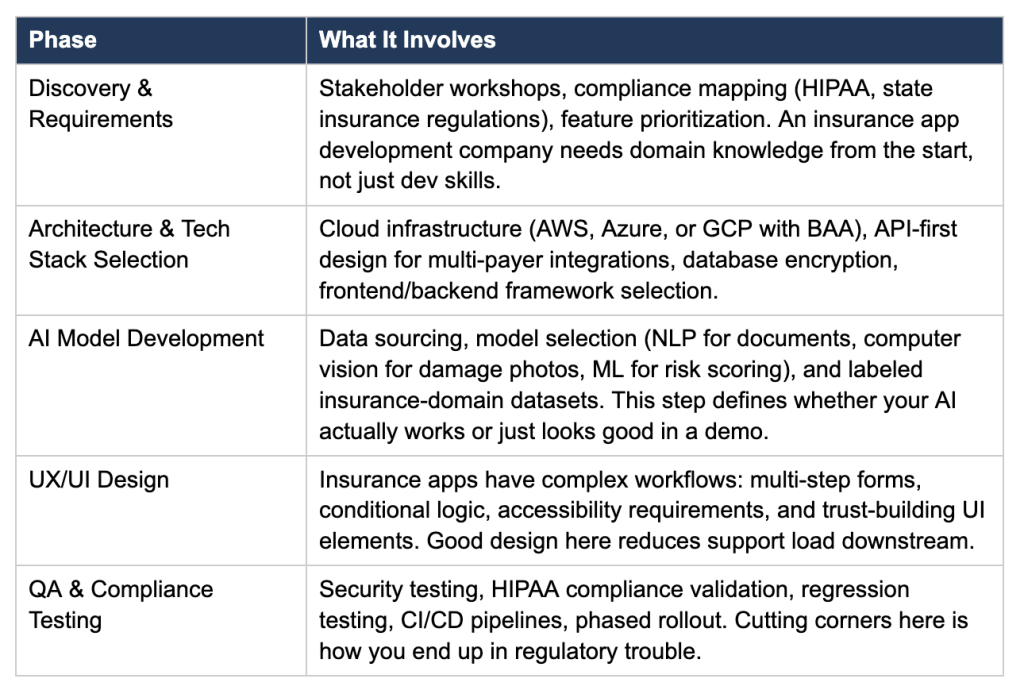
Building an insurance app with AI components isn’t a standard mobile app development project. Whether you’re a health insurance company or a property carrier, insurance software development carries unique requirements around compliance, data security, and integration complexity. Here’s what the process of building a custom insurance mobile app actually involves, step by step.
The AI model development phase deserves special attention. Insurance-domain datasets are hard to come by and expensive to label. A model trained on generic data will underperform in production, so you need a team that understands both the ML side and the insurance domain well enough to source, clean, and validate the right training data. This is why healthcare software development trends increasingly favor specialized development partners over general-purpose firms.
Beyond the standard development phases, there are a few AI-specific implementation practices that often get overlooked but make a big difference:
- Build a feedback loop from day one. AI models drift over time as claim patterns, regulations, and customer behavior change. Your app should capture adjuster corrections, user overrides, and edge cases automatically so the model can be retrained on real production data, not just the original training set.
- Design for explainability, not just accuracy. A fraud model that flags a claim but can’t explain why is a liability in a regulated industry. Build explanation layers into your AI outputs so adjusters, compliance teams, and regulators can understand each decision.
- Run shadow mode before going live. Deploy your AI model alongside existing manual workflows first. Let it make recommendations without acting on them, then compare its output to human decisions. This catches problems before they reach real policyholders.
- Plan for graceful fallbacks. AI won’t handle every scenario. Design your app so that when the model hits low confidence or encounters an edge case, it routes to a human seamlessly, without the user feeling like the system broke.
What’s Next for AI in Insurance App Development
The insurance mobile applications landscape is evolving fast. Here are the emerging technologies and trends worth watching as you plan your next build: Agentic AI in claims. We’re moving past simple automation. According to a Canon BPS analysis, insurers now allocate about 12% of their AI budget to agentic AI, systems that can autonomously manage entire claims workflows, flag fraud, and facilitate settlements, escalating to a human only for exceptions. In auto insurance, agentic AI has cut average claims cycles from 12 days to under four hours.
Source: AllAboutAi
IoT integration. Connected homes and vehicles are generating real-time insurance data that feeds directly into underwriting and claims models. Telematics-based pricing in car insurance apps is already mainstream; expect the same approach to expand into property insurance apps and health coverage, where wearable data and smart home sensors create new risk profiles.
Generative AI for policy documents. Policy language is dense and repetitive, exactly the kind of content generative AI handles well. Expect to see AI-generated first drafts of policy documents, coverage summaries, and client communications become standard tooling.
Cyber insurance powered by AI. As AI-related threats grow, so does demand for cyber insurance. According t o Insurance Business Mag, SME adoption of cyber insurance has surged 50%, and insurers are increasingly using AI in cyber underwriting to simulate attack scenarios and model financial impact. For fintech and insurance app developers, this is a fast-growing segment.
How Kanda Can Help
Kanda has been delivering digital health and insurance software for over 30 years. We can help with:- Designing and building AI-powered claims processing, underwriting, and fraud detection features from the ground up.
- Developing recommendation engines and personalized coverage tools for health and property insurance.
- Building HIPAA-compliant, scalable cloud architectures on AWS, Azure, or GCP.
- Integrating AI into existing insurance platforms through EHR integrations, payer APIs, and data pipelines.
- Managing the full lifecycle: discovery, architecture, development, QA, deployment, and ongoing support.
Conclusion
AI has already transformed insurance apps. Claims that used to take a month now close in days. Underwriters spend their time on risk analysis instead of digging through 600-page manuals. Fraud gets caught before it costs anyone money. These are things that are happening right now, in production, at scale. The hard part was never the AI itself. It’s building the app around it: the compliance layer, the data pipelines, the UX that makes a complex insurance process feel simple on a phone screen. That’s where the real work lives, and that’s where the right development partner makes all the difference.Related Articles

Scalable Claims Processing: Migrating from Legacy to Modern Insurance Platforms
The insurance industry has relied on legacy systems for decades, but these platforms have become serious obstacles to growth. A staggering 90% of businesses report being held back in their digital transformation efforts by outdated technology. The financial impact is severe. About 70% of IT budgets go straight into maintaining old infrastructure. Many insurers can't…Learn More
From Concept to Deployment: Creating Robust Insurance Fraud Detection Software
Insurance fraud is a significant and escalating problem worldwide, costing the industry massive losses annually. According to the Coalition Against Insurance Fraud, insurance fraud steals at least $308 billion every year across all lines of insurance in the United States. This staggering figure not only impacts insurers' bottom lines but also leads to increased premiums…Learn More
How Digital Transformation is Advancing the Insurance Industry
Not unlike healthcare and finance, the insurance industry has undergone a tremendous shift towards digital technologies since the start of the COVID-19 pandemic. While the coronavirus is generally thought to be the primary catalyst for these hastened reforms, the changes themselves can largely be attributed to advancements in technology, evolving customer expectations, and the looming…Learn More