

Healthcare Web Development: The Fastest Route to Scalable Patient Care
Outdated medical software is becoming a rising problem for healthcare facilities across the US, yet the push for digital patient experiences continues to grow. A CDC study found that 47.7% of adults ages 30-44 use the internet to communicate with a doctor or doctor's office. However, still existing paperwork, manual processes and legacy systems prolong waiting times, create data silos, and prevent patients from easily accessing their own health information. In light of this, more and more medical organizations are recognizing the need to implement scalable and secure software solutions that would allow doctors and patients to work in sync via precise and connected care.
Modern healthcare web development centers on building secure, reliable digital platforms that safeguard patient information, power telehealth services, and keep the entire system running efficiently.
Yet healthcare organizations have historically been slower to embrace new technology. Privacy and security standards are strict, which prevents organizations from moving too quickly or experimenting with new digital solutions without extensive review and validation. But the global pandemic changed everything. Medical visits needed to happen remotely, and fast. Telehealth went from being a nice-to-have to a household word almost overnight. Patient expectations shot up and stayed there. Now, healthcare organizations need to catch up -- and this is how they can do it.
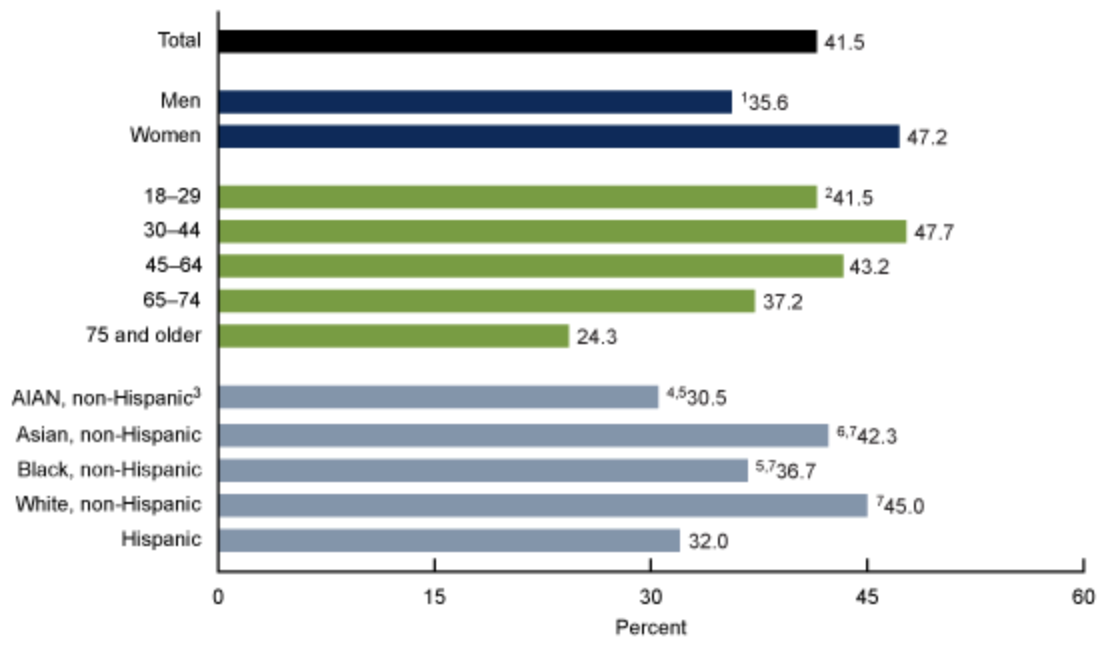 Percentage of adults who have used the internet in the past 12 months to communicate with a doctor or doctor's office.
Souce: CDC
Percentage of adults who have used the internet in the past 12 months to communicate with a doctor or doctor's office.
Souce: CDC
Why is the demand for digital health platforms growing?
Two forces are pushing healthcare toward digital solutions: what patients expect and what operations desperately need. Patients care about convenience above almost everything else. A 2025 Tebra survey revealed that 65% of patients would actually switch providers just to get better digital features. Their wishlist is pretty straightforward:- Online Access: 48% want to check lab results and visit summaries online.
- Easy Booking: 43% value online booking, and 40% want simple online rescheduling.
- Better Communication: 38% want easier ways to reach their practice, and 40% want secure messaging options.
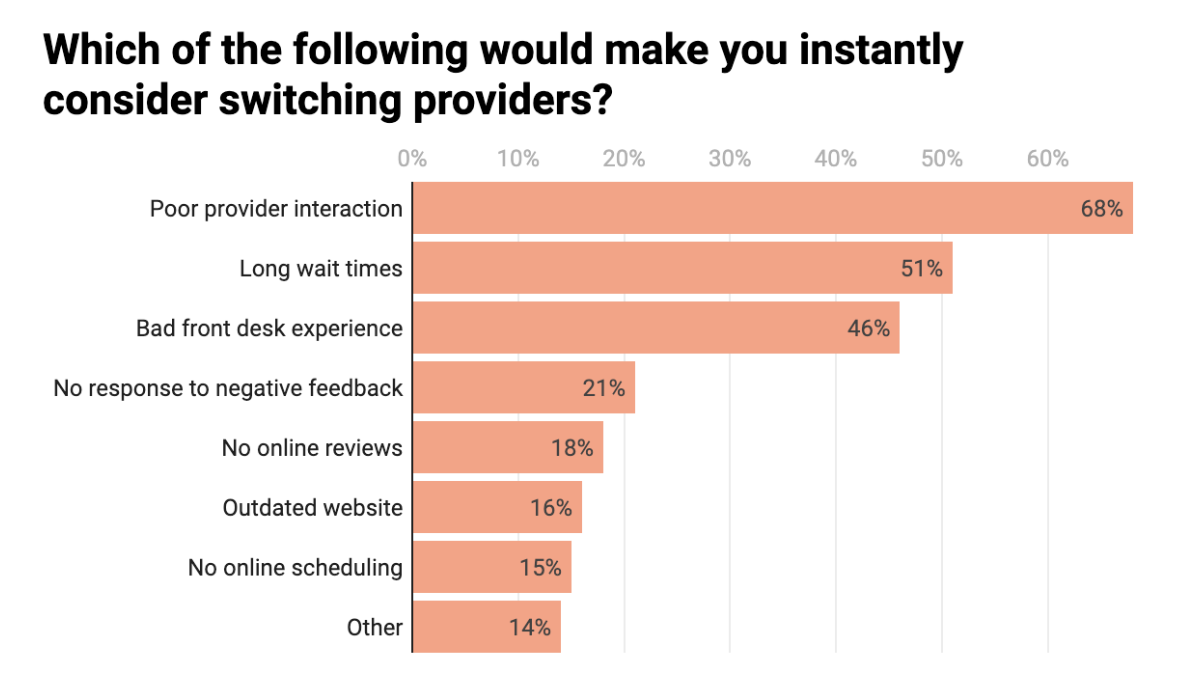 Source: Tebra
On the operational side, digital platforms fix problems that have existed for years. Traditional paper systems are slow, messy, and full of opportunities for mistakes. When you design a web platform well, everyone benefits:
Source: Tebra
On the operational side, digital platforms fix problems that have existed for years. Traditional paper systems are slow, messy, and full of opportunities for mistakes. When you design a web platform well, everyone benefits:
- Efficient Patient Management: Providers get streamlined access to patient information and better data organization.
- Automated Administrative Tasks: Staff spend less time buried in paperwork and more time on meaningful work.
- Improved Patient Access and Reduced Waiting Times: Patients can look at their own medical records whenever they need to and communicate with providers without phone tag.
- Reduced Legacy Expenses: Healthcare organizations can reduce expensive maintenance fees, outdated hardware expenses, and the hidden costs of keeping old systems afloat.
-
Cross-Department Alignment: Clinical, administrative, and billing teams stay in sync with consistent, accurate data.
What are the essential features of a healthcare web application?
A healthcare platform that works needs to balance features for patients, providers, and administrators carefully.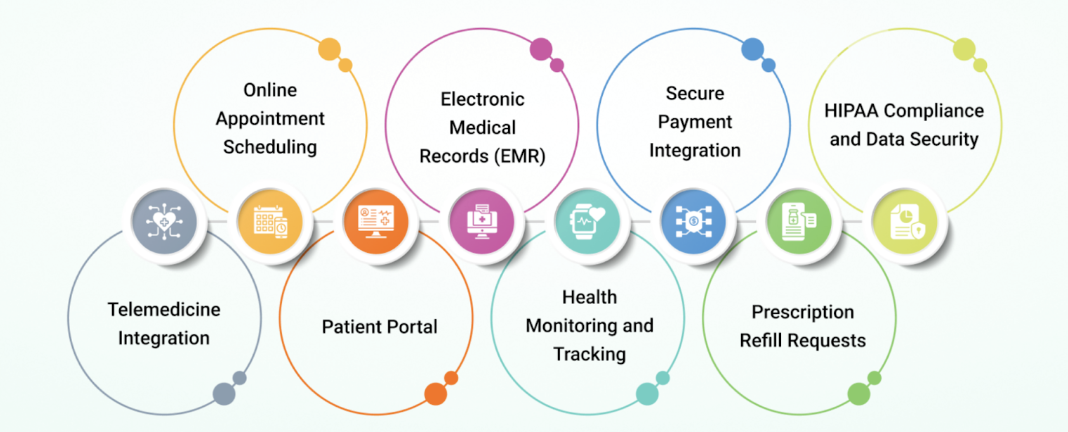 Source: Emedstore
Patient-Facing Features
These tools make it easier for patients to engage with their care, handle things themselves, and get what they need quickly.- Appointment Scheduling: Patients can see when providers are available in real-time, book appointments, and change or cancel them when plans shift.
- Telehealth Integration: Virtual consultations happen through secure, high-quality video. Secure messaging lets patients and providers communicate remotely without security risks.
- Secure Medical Records Access: Patient portals give people secure access to their medical history, test results, diagnoses, and summaries from visits.
- Prescription Management: Patients can view what medications they're taking and request refills right through the platform.
- Online Bill Payment: A secure payment system handles co-pays and lets patients settle bills without mailing checks or making phone calls.
Provider and Administrative Features
These backend features power everything else. They're designed to make clinical and administrative workflows actually function smoothly.- Patient Management Dashboards: A central hub where providers and staff manage patient profiles, check schedules, and pull up clinical documentation without digging through multiple systems.
- Clinical Workflow Tools: Tools for documenting clinical information, sending prescriptions electronically to pharmacies, and analyzing patient data.
- Billing and Claims Management: The administrative backend automates billing processes, deals with insurance claims, and tracks payments. This reduces paperwork and the mistakes that come with manual entry.
- Reporting and Analytics: Executives get reports on how efficiently operations run, what patient outcomes are like, and how the organization performs financially.
Best Practices for Essential Features
Healthcare web design isn't about making things look pretty. It's about accessibility, building trust, and making things usable for an audience that might be older, less comfortable with technology, or dealing with stress.- Prioritize Accessibility: Your design needs to work for diverse populations, including people with disabilities. This means following the Web Content Accessibility Guidelines (WCAG) 2.1 AA standards, for high-contrast color options, text that can be resized, and full keyboard navigation support.
- Demand Simplicity and Clarity: Keep the user interface clean and easy to understand. Use large, readable fonts and buttons that are obviously clickable. Navigation should be simple. Calls-to-Action (CTAs) should be clear.
- Use a Mobile-First Responsive Design: The platform has to work perfectly on every device. A Tebra survey found that 31% of patients got frustrated with mobile forms that don't function properly. A bad mobile experience sends patients looking elsewhere.
What is the right tech stack for healthcare web development?
The technology stack must be chosen for security, scalability, and compliance.- Cloud Infrastructure: A HIPAA-compliant cloud platform like AWS, Azure, or Google Cloud (GCP) is the foundation. They provide the necessary secure, scalable services and will sign a BAA.
- Backend: The server-side logic must be robust. Common choices include Node.js, Python, Java, or .NET.
- Frontend: To build the interactive user interface, modern JavaScript frameworks like React, Angular, or Vue.js are standard.
- Databases: The database solution (like PostgreSQL or MongoDB) must support robust encryption for all data at rest.
A clear understanding of the tech stack helps accurately evaluate the scope of technical work and allows the team to prepare an effective implementation strategy in advance. Managing this infrastructure to ensure compliance and performance requires a specialized approach. This is where DevOps services become critical for automating deployment, monitoring, and security.
How do you ensure security and HIPAA compliance?
Security is the most important requirement for any platform that handles patient data. In the US, the Health Insurance Portability and Accountability Act (HIPAA) governs how this works. Any web application that stores, processes, or sends protected health information (PHI) has to meet HIPAA requirements. Making your platform compliant means following several key rules. The HIPAA Security Rule is a critical one. It spells out exactly what technical, administrative, and physical protections you need to keep electronic PHI (ePHI) safe.Key Safeguards for Web Development
- Technical Safeguards: This is the technology you use to keep data safe. You need strong access controls, like role-based access control (RBAC) and multi-factor authentication (MFA). The 2024 Change Healthcare attack happened partly because one account didn't have MFA turned on. Data has to be encrypted when it's moving over the internet ("in transit") and when it's stored in a database ("at rest"). You also need audit controls that log every time someone accesses ePHI.
- Administrative Safeguards: These are your policies and procedures for managing security. Run regular risk assessments. Test for vulnerabilities. Train your workforce. Have a contingency plan ready for data backup and disaster recovery situations.
- Physical Safeguards: This means securing the actual hardware, like servers. If you're using a major cloud provider, they handle most of this responsibility for you.
How do you handle integration with existing healthcare systems?
Your new web platform can't stand alone. It needs to talk to the complicated web of software already running in hospitals and clinics. This is called interoperability, and you need it to create a single, reliable source of truth.EHR/EMR Integration
The most important integration connects to the organization's electronic health record (EHR) or electronic medical record (EMR) system. This is where all patient data lives. Integrating with it ensures continuity of care and eliminates the mistakes and wasted time that come with entering data manually. You do this using established healthcare data standards:- HL7 (Health Level Seven): A widely used legacy standard for exchanging clinical and administrative information.
- FHIR (Fast Healthcare Interoperability Resources): A modern standard built around APIs that's gaining adoption quickly. FHIR is more flexible than HL7 and easier for web developers to work with. It makes data flow smoothly between old legacy systems and new applications.
Third-Party Service Integration
Beyond the EHR, your platform needs to connect to other services. An API-first architecture handles this. Common integrations include payment processors, insurance verification systems, lab and pharmacy systems, and telehealth video providers.What does the healthcare web development process look like?
Healthcare projects succeed when they follow a careful, phased process that keeps compliance and stakeholder alignment front and center.1. Planning and Requirements Gathering
This foundational phase prevents expensive failures down the road. Run workshops with everyone involved: clinicians, administrators, IT staff, and patients. Understand what they need, where current systems cause pain, and how workflows actually function. During this phase, you may take inventory of available resources, make a detailed migration plan, document workflows, and make a clear outline of regulatory and compliance requirements.2. Design and Prototyping
This phase turns requirements into something tangible. Start with information architecture and simple wireframes, then move to high-fidelity, interactive prototypes. Test these prototypes with actual users. Gather their feedback and make adjustments before you write a single line of production code.3. Development and Testing
This is where you build the product. Often you'll start with a minimum viable product to launch and test core functionalities first. Quality assurance and testing happen continuously, not after everything's built. Healthcare testing is rigorous. You need functional testing, integration testing, performance testing, and security testing. Clinical staff need to run user acceptance testing. A final compliance audit caps everything off.4. Deployment and Ongoing Maintenance
Launching is just where the platform's lifecycle begins. This stage includes rolling out the platform in phases to avoid disrupting operations, training staff comprehensively, and establishing an ongoing maintenance plan. Healthcare platforms are never truly "finished." They need continuous monitoring, regular security patches, and updates as regulations change and technologies advance.Kanda in Action: Web Development for Top Oncology Center
Kanda worked with a top oncology center and research facility to bring a genetic testing tool onto a scalable, HIPAA-compliant web platform. The tool looks at a person’s medical and family history to estimate their chances of carrying inherited genetic mutations linked to certain cancers. The issue was easy to see: the process was complex, and there simply weren’t enough genetic counselors to identify every high-risk patient in time. Kanda built a web platform that could be used by both individual patients and large healthcare groups. A major part of the project was integrating with hospital EHRs through FHIR and HL7, so clinicians could access scores directly within their day-to-day workflows. This made assessments smoother and helped care teams spot high-risk patients earlier, giving them a better chance to intervene before the disease developed.How Kanda Can Help
When developing a healthcare web solution, you need a partner with real domain expertise and a track record that speaks for itself. We can help you:- Build Custom Platforms: Develop secure, scalable, HIPAA-compliant custom software solutions tailored to your specific scientific and operational requirements.
- Master Complex Integrations: Bridge the gap between your modern web platform and legacy systems with expert EHR/EMR integration services using standards like FHIR and HL7.
- Accelerate Product Development: Use our specialized expertise in healthcare software development to move your digital health product from concept to market quickly while staying compliant.
- Ensure End-to-End Security: Implement robust security and compliance across your entire software lifecycle with our dedicated DevOps and security teams.
Conclusion
Today, building a digital platform isn’t something healthcare organizations can put off. It’s critical for keeping operations on track and for meeting patient expectations before they look elsewhere. The pandemic fast-tracked the transition from paper to integrated digital experiences and created a new baseline for what modern care should deliver. Those that embrace this change see the impact quickly: better operational flow, happier patients, and a stronger position in a market that now operates with a digital-first mindset.Related Articles

CMS Prior Authorization Rule 2026: What Health Systems and Payers Actually Need to Build by October 2027
Key Takeaways The 2026 CMS Prior Authorization (CMS-0062-P) rule extends electronic prior authorization requirements to drugs for the first time, closing a major gap left by the 2024 rule. The hard compliance deadline is October 1, 2027 - by that date, systems must be live, not in development or testing. Compliance requires three major technical…Learn More
Unlocking Actionable Insights from Medical Data with Clinical NLP
Key Takeaways Clinical NLP extracts useful details from notes, reports, and other free-text records so teams can work with them. The clearest use cases include coding support, trial matching, safety monitoring, registry work, and population health. The output is only useful if it connects to the standards healthcare teams already use: SNOMED CT, RxNorm, LOINC,…Learn More
Why Omics and Clinical Data Integration Remain a Challenge and How to Fix It
Key Takeaways Omics and clinical data often remain separate, making them harder to use together than they should be. The main challenge is usually not the data itself, but the mismatched formats, siloed systems, and disconnected teams surrounding it Addressing that requires robust infrastructure, shared standards, and workflows that hold up without constant manual intervention.…Learn More
AI Copilots in Healthcare: Minimizing Diagnostic Risks With Smart Virtual Assistants
Key Takeaways AI copilots act as always-on virtual assistants managing documentation, triage, and decision support so clinicians can focus on patients. With 12 million diagnostic errors and up to 80,000 deaths annually, AI copilots are built to catch what overloaded clinicians miss, not replace them. Dragon Copilot saves clinicians around 5 minutes per encounter with…Learn More