

January 29, 2026
Healthcare
TEFCA for Software Vendors: Overview of an Adoption Roadmap
Key Takeaways:
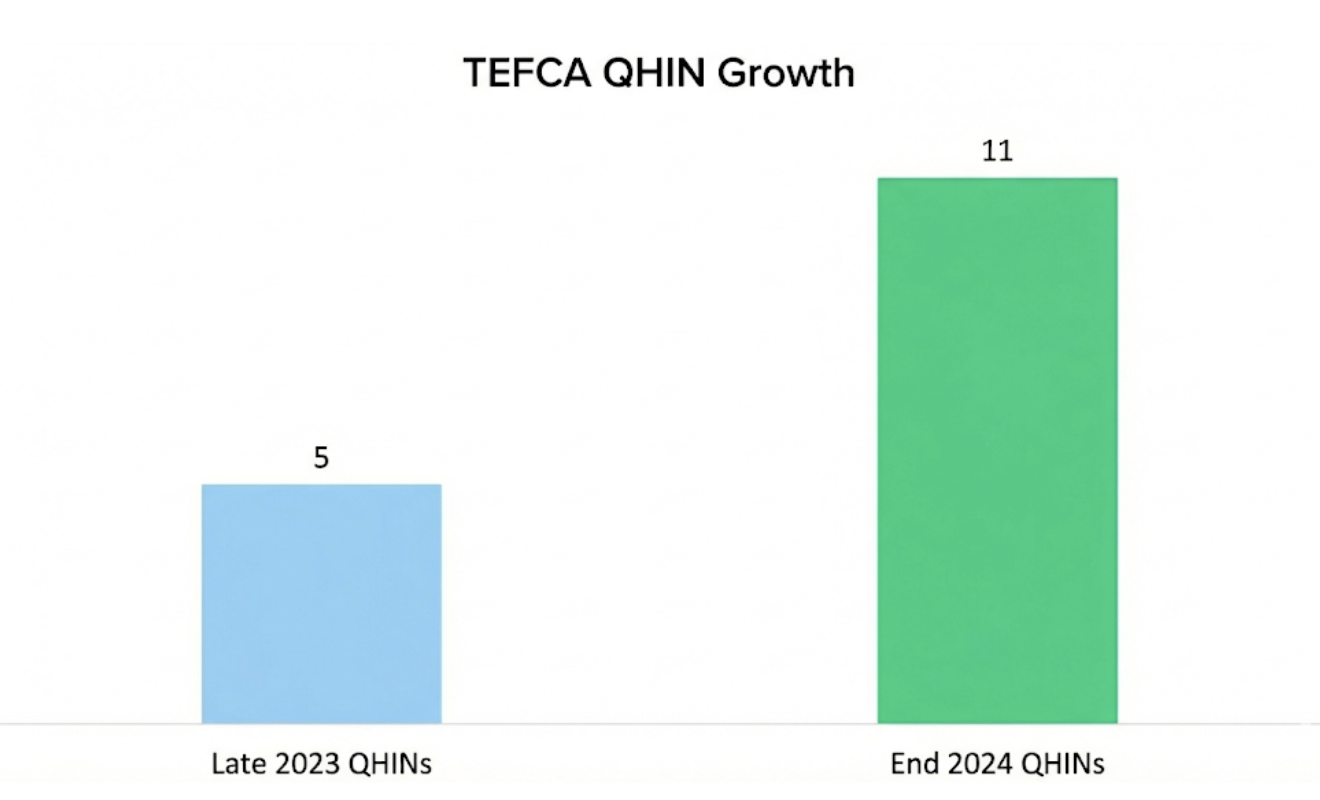 Source: Kanda Software
 Source: Kanda Software
 Source: Kanda Software
- TEFCA offers a standardized path to nationwide health data exchange, reducing the need for costly one-off integrations.
- Software vendors can join as a QHIN, participant, or subparticipant—each with different requirements, costs, and timelines.
- Implementation typically takes 12–24 months, depending on FHIR maturity and participation level.
- Healthcare customers increasingly expect TEFCA connectivity in RFPs, making early adoption a competitive advantage.
Source: Kanda Software
Understanding TEFCA: The Trusted Exchange Framework and Common Agreement
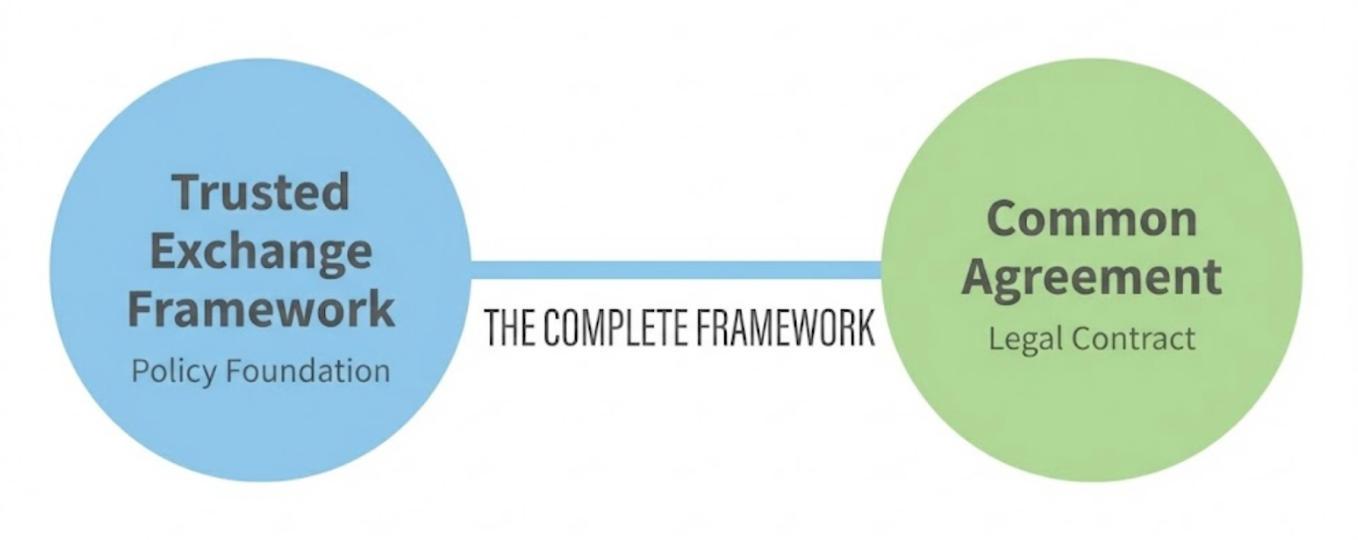
TEFCA is an initiative led by the Assistant Secretary for Technology Policy (ASTP), the group formerly known as the Office of the National Coordinator (ONC) for Health Information Technology. It was born out of the 21st Century Cures Act. Think of TEFCA as a "network of networks." It allows hospitals, doctors, insurance companies, and patients to share health data across different health information networks using a single, unified set of rules. For healthcare software vendors, TEFCA changes the game in two ways. First, it gives you a standard path for nationwide connectivity, which significantly reduces the need for building custom integrations for every health system . Second, it creates a clear market divide: vendors who can handle TEFCA exchange have a massive advantage over those who can't. The framework is made up of two main parts:- The Trusted Exchange Framework acts as the policy foundation. It's a set of principles and best practices that dictate how electronic health information should move across different networks.
- The Common Agreement is the actual legal contract. QHINs sign this with the Sequoia Project, which serves as the Recognized Coordinating Entity (RCE) managing the rollout. It spells out the specific technical and legal rules everyone has to follow to participate.
Source: Kanda Software
Core Components of the TEFCA Framework
Right now, TEFCA supports six specific exchange purposes for data sharing. Your organization needs to be able to support these:- Treatment – Sharing data to help healthcare providers take care of patients.
- Payment – Covers utilization review, enabling payers and providers to exchange clinical documentation.
- Healthcare Operations – Useful for things like measuring quality, improving services, and general business planning.
- Public Health – Helping public health agencies track diseases and handle investigations, including electronic case reporting.
- Government Benefits Determination – Letting agencies within the Department of Health and Human Services determine if someone is eligible for benefits.
- Individual Access Services – Giving patients a way to access and download their own electronic health records.
Technical Foundation: TEFCA FHIR Implementation Requirements
TEFCA FHIR Roadmap: Standards and Specifications
The FHIR Roadmap for TEFCA Exchange explains how everyone will gradually move toward the FHIR standard over four stages. Knowing where you are on this timeline is a big part of planning your development work. Currently, TEFCA uses FHIR R4 as the starting point. The USCDI (United States Core Data for Interoperability) tells you exactly which data elements need to be shareable. Under the HTI-1 Final Rule, health information technology modules were expected to support USCDI v3 using FHIR US Core 6.1.0 by January 1, 2026. When it comes to security and authentication, TEFCA relies on SMART, on FHIR and OAuth 2.0. It also uses UDAP (Unified Data Access Profiles) to make sure client registration and authentication stay secure across the whole network. Key technical details you'll need to prepare for include:- Making sure your APIs are FHIR R4 compliant and follow US Core guides.
- Supporting all the data classes and elements listed in the USCDI.
- Setting up provenance tracking so you know exactly where the data came from.
- Enabling Bulk Data Access so you can move data for entire groups of patients at once.
API Development and Integration Points
There are a number of technical requirements that must be met in order to build APIs that work with TEFCA. Your FHIR server needs to provide endpoints that can perform patient matching queries, support the necessary exchange purposes, and send data back in formats that are compliant. Finding the right patient is really crucial, but also technically complex. TEFCA says that inquiries must include demographic information, and your systems must be able to find patients across different data sources without creating duplicate or incorrect entries. You'll also need a way to transform the data. This means taking information from various sources, normalizing it, and mapping it to your own internal models while staying FHIR compliant. This is a common spot where teams run into interoperability barriers that require a lot of planning to get through. Our FHIR implementation guide walks through strategies for moving from older HL7 V2 setups to modern FHIR-based exchange.TEFCA Adoption Roadmap: Implementation Phases for Software Vendors
Phase 1: Assessment and Planning (Months 1-3)
The first step is gap analysis. You need to see where your current tech stands compared to what TEFCA requires. Your assessment should look at:- Technical readiness: Do you actually have FHIR R4 APIs ready? Which version of USCDI can your system handle right now?
- Security infrastructure: Does your encryption and authentication meet HIPAA and TEFCA's specific security requirements?
- Data quality: Can your system accurately match patients when talking to other health information networks?
Phase 2: Technical Development and Integration (Months 4-9)
Once your strategy is set, the actual coding begins. Your main tasks will include:- Building out or upgrading your FHIR server.
- Locking down security (encryption, logins, and permissions).
- Building a system to manage patient consent.
- Setting up the pipelines that transform and normalize data.
- Building QA environments for testing.
Phase 3: QHIN Selection and Onboarding (Months 7-12)
Unless you're becoming a QHIN yourself, you'll need to pick a partner. When evaluating QHINs, look at:- Where they operate and which networks they connect to.
- What they can do technically and which use cases they support.
- How they charge (the cost and fee structure).
- How long it takes to get up and running and what kind of support they offer.
Phase 4: Testing and Certification (Months 10-14)
The testing process is tough. You're going to have to finish:- Internal checks to make sure you meet TEFCA specs.
- Specific tests required by your chosen QHIN.
- Tests to prove you can connect to the rest of the TEFCA network.
- Load testing to make sure your system doesn't crash under high volume.
- Security audits and "pen testing" to find vulnerabilities.
Qualified Health Information Network Participation Options
Direct QHIN Participation: Requirements and Considerations
Becoming a QHIN is a massive investment. You have to pass intense security and tech tests, prove you can connect people nationwide, and sign a direct contract with the Recognized Coordinating Entity (RCE). The upside is that you have total control over your network and can even make money by connecting others. However, the costs, infrastructure needs, and the sheer amount of work required to keep it running are very high. The current list of QHINs includes names like eHealth Exchange, Epic Nexus, Health Gorilla, KONZA, MedAllies, CommonWell, Kno2, and recently Oracle Health and Surescripts.Becoming a Subparticipant Through an Existing QHIN
For most software companies, joining as a subparticipant is the smartest move. It's much more practical, requires significantly less infrastructure, and gets you to market a lot faster. In this setup, you connect to a participant organization, which then connects to a QHIN. You still have to meet technical standards, but the overall burden of compliance and hardware is much lower. Costs vary depending on which QHIN you go with. Some charge flat participation fees, while others might charge based on how many transactions you make. It's a good idea to look at several options before you sign anything.Participant Status: Entry Point for Smaller Vendors
If you're a smaller vendor or only have a few use cases, the "participant" status is basically the minimum level for getting into TEFCA. You connect directly to a QHIN and can trade data across the whole network. This is often the most cost-effective way to get connected. While the technical requirements are simpler than becoming a QHIN, you still need to have your FHIR capabilities and security protocols in order. This path also lets you start small and grow your participation level as your needs change.Common Agreement: Legal and Operational Obligations
Key Terms and Conditions in the Common Agreement
The Common Agreement is a legally binding contract for everyone in TEFCA. Some of the most important parts include:- Data use and disclosure: Include clear rules on how you can use the health data you get.
- Liability and indemnification: Define the person who is responsible if something goes wrong.
- Audit rights: The RCE has the right to check in and make sure you're following the rules.
- Termination conditions: The reasons why your access might be cut off.
- Amendment processes: How the agreement itself can change over time.
Privacy and Security Requirements Under TEFCA
TEFCA takes HIPAA and adds more on top of it. One of the biggest things is that everyone has to encrypt individually identifiable information, at rest and in transit, regardless of whether they are officially covered by HIPAA. State laws also make things a bit complicated. Some states have stricter privacy and security rules than others, and your system has to be able to handle those variations. Managing consent is another big component. You have to be able to track and respect a patient's choice about their data across the entire network. Also, if there's a breach, your notification process has to match both HIPAA and TEFCA rules. If you're looking for a good starting point for security, frameworks like NIST and HITRUST are excellent benchmarks.Resource Allocation and Implementation Considerations
Budgeting for TEFCA Implementation
The cost of getting TEFCA-ready depends on your starting point. You'll need to budget for:- Development costs: Time for your engineers (or an outside firm) to build APIs and security tools.
- QHIN fees: These vary, ranging from flat fees to transaction-based models.
- Infrastructure: The cost of more server capacity, security software, and monitoring.
- Compliance and legal: Money for contract reviews, audits, and ongoing monitoring.
- Training: Getting your staff up to speed on the new systems.
Building the Right Technical Team
You're going to need a specific set of skills to make this work:- FHIR developers who actually understand healthcare data standards.
- Security specialists who know the ins and outs of healthcare compliance.
- Integration architects who can build systems that scale.
- Compliance experts who can handle the regulatory paperwork.
Timeline Expectations and Critical Path Items
A realistic timeline for getting fully into TEFCA is about 12-18 months if you already have some FHIR tech. If you're starting from scratch, plan for 18-24 months. The things that usually cause delays are:- Building FHIR APIs from the ground up.
- Setting up and testing security infrastructure.
- The back-and-forth of legal negotiations.
- The actual onboarding and testing with your QHIN.
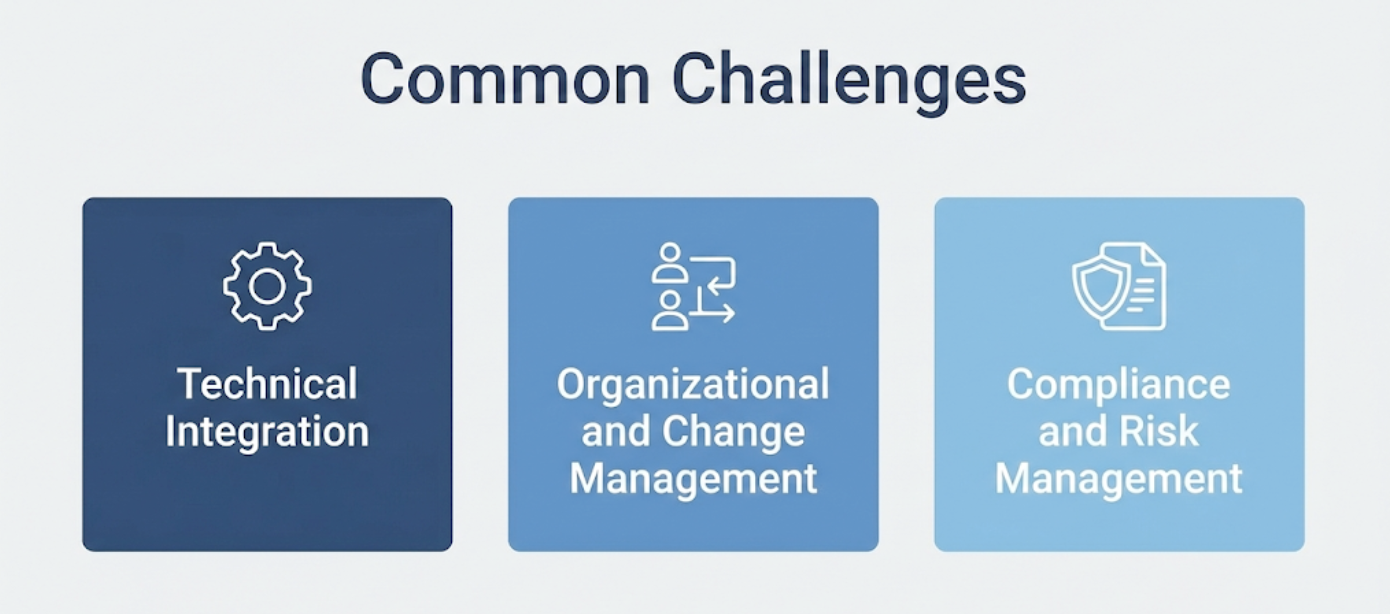
Overcoming Common Implementation Challenges
Source: Kanda Software
Technical Integration Obstacles
Dealing with legacy systems is usually the primary challenge. If your current software is built on HL7 V2, moving to FHIR is going to require a lot of refactoring. Data quality is another huge hurdle. Patient matching only works if your demographic data is clean. If your records are inconsistent, you're going to deal with matching failures and duplicate medical records. You also have to worry about performance. TEFCA can generate a huge number of queries, and if your system wasn't built to handle that kind of load, it might struggle to keep up.Organizational and Change Management Hurdles
Often, the technical implementation is easier than the organizational alignment. You need to get your executives to buy in and keep different departments aligned on the project. Workflow changes are also a real factor. TEFCA changes how your staff interacts with the software, so you'll need to plan for training and support to help them adjust. Finally, don't ignore the documentation. Staying compliant means keeping detailed evidence of your technical setups and security practices.Compliance and Risk Management Issues
The rules are always changing. The Common Agreement moved to Version 2.1 in late 2024, and more updates are coming. You need to build your system with enough flexibility to handle future changes. Operating in multiple states adds another layer of difficulty. Privacy laws change across state lines, and your system has to stay consistent while following those local rules. There's also the issue of information blocking. Under the 21st Century Cures Act, you can't unfairly limit access to health data. Participating in TEFCA is actually a great way to show that you are following those rules.TEFCA Healthcare Ecosystem: Stakeholder Landscape
Current QHINs and Their Capabilities
The list of QHINs has grown quite a bit since the launch. Some of the major players include:- eHealth Exchange: One of the originals with a massive national footprint.
- Epic Nexus: Epic's own network that connects their customers to the rest of TEFCA; by late 2024, they had over 625 hospitals connected.
- CommonWell Health Alliance: A well-established network that became a QHIN in early 2024.
- Health Gorilla: They focus heavily on connecting clinical labs and imaging centers.
Health System and Payer Requirements
Your customers have high expectations. Health systems want your software to integrate seamlessly with their electronic health records systems, whether they use Epic, Oracle Health, or MEDITECH. Insurance companies are also looking for TEFCA connectivity to handle things like quality measurements and checking on member services. With HEDIS reporting now integrated into TEFCA's standard procedures, there are expanded opportunities for exchanging data related to quality.How Kanda Can Help
Getting TEFCA-ready requires a mix of expertise in data standards, security, and complex integrations. Kanda has a long history in healthcare software development, and we can help speed up your path to compliance. Our teams can help with:- FHIR API development: We build APIs that actually meet USCDI and TEFCA specs.
- Interoperability consulting: We can look at what you have now and build a roadmap for where you need to go.
- Security and compliance: We handle the encryption, logins, and audit tools that TEFCA demands.
- System integration: We connect your current tech to QHIN infrastructure and fix old legacy issues.
- Custom development: We build new features that take advantage of TEFCA connectivity for your users.
Conclusion
TEFCA is a massive shift in how health data moves across the country. For vendors, it's definitely a challenge, but it's also a huge opportunity. By investing in TEFCA now, you're setting yourself up to meet customer expectations, reduce the burden of custom integrations, and compete on a national level. The framework will keep changing, but the trend is clear: the vendors who move now will be the ones leading the industry in the years to come.Related Articles

CMS Prior Authorization Rule 2026: What Health Systems and Payers Actually Need to Build by October 2027
Key Takeaways The 2026 CMS Prior Authorization (CMS-0062-P) rule extends electronic prior authorization requirements to drugs for the first time, closing a major gap left by the 2024 rule. The hard compliance deadline is October 1, 2027 - by that date, systems must be live, not in development or testing. Compliance requires three major technical…Learn More
Unlocking Actionable Insights from Medical Data with Clinical NLP
Key Takeaways Clinical NLP extracts useful details from notes, reports, and other free-text records so teams can work with them. The clearest use cases include coding support, trial matching, safety monitoring, registry work, and population health. The output is only useful if it connects to the standards healthcare teams already use: SNOMED CT, RxNorm, LOINC,…Learn More
Why Omics and Clinical Data Integration Remain a Challenge and How to Fix It
Key Takeaways Omics and clinical data often remain separate, making them harder to use together than they should be. The main challenge is usually not the data itself, but the mismatched formats, siloed systems, and disconnected teams surrounding it Addressing that requires robust infrastructure, shared standards, and workflows that hold up without constant manual intervention.…Learn More
AI Copilots in Healthcare: Minimizing Diagnostic Risks With Smart Virtual Assistants
Key Takeaways AI copilots act as always-on virtual assistants managing documentation, triage, and decision support so clinicians can focus on patients. With 12 million diagnostic errors and up to 80,000 deaths annually, AI copilots are built to catch what overloaded clinicians miss, not replace them. Dragon Copilot saves clinicians around 5 minutes per encounter with…Learn More