

December 23, 2024
General
Seven Benefits of Corporate Learning Management System (LMS) Integration
Adaptation and skill development are critical to success, which is why businesses are increasingly turning to learning management systems (LMS) to remain competitive. According to Business Wire, the average organization uses 254 software programs, with only 45% being used on a daily basis.
An excessive number of tools typically leads to inefficiencies and low employee adoption rates. Integrating an LMS with an existing company infrastructure is a strategic decision.
Here's how LMS integration can improve corporate training and staff development.
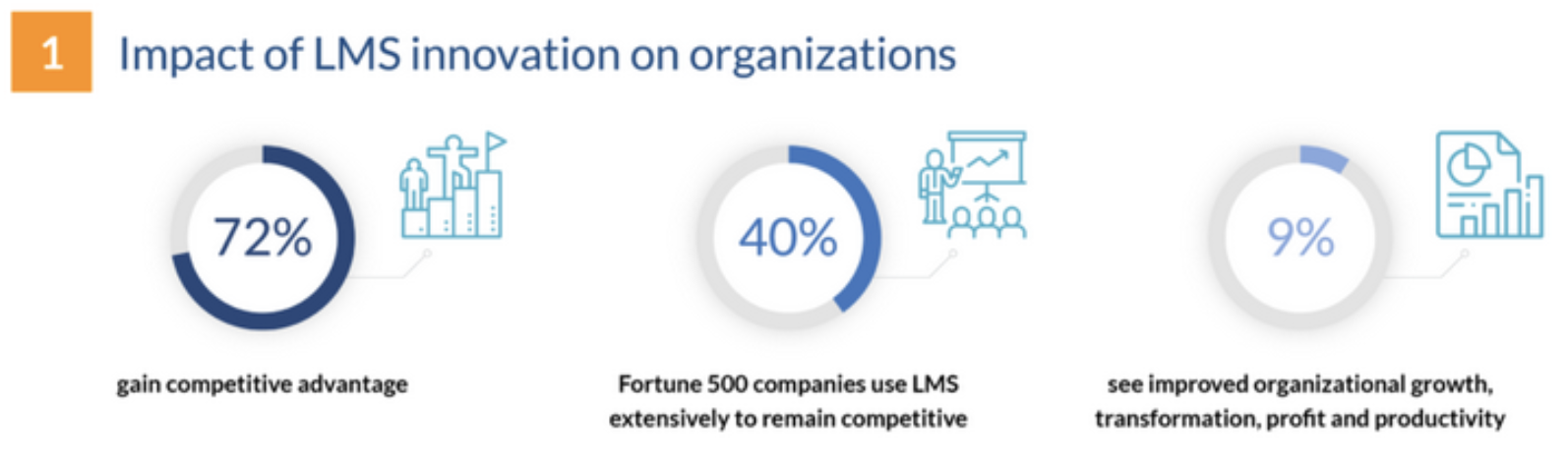 Source: Finances Online
What is LMS integration and why does it matter?
LMS integration is the process of linking a learning platform to existing systems such as HR software, CRM tools, and other business applications. Integrated systems enable easy access to training resources, improve data flow, and eliminate silos. For businesses, this includes increasing productivity, improving employee satisfaction, and connecting learning activities with business objectives. To learn more about how Kanda provides seamless integration and long-term collaboration, read why organizations pick us as their partner by design.
Source: Finances Online
Benefit 1. Improved Onboarding
One of the most clear benefits of LMS integration is more efficient onboarding. When an LMS connects directly to HR systems, new employees have rapid access to personalized training programs. LMS integration also contributes to:- Reduced administrative overhead: HR departments can now automatically allocate training, which reduces administrative expenditures.
- Personalized experience: New employees are given role-specific resources from day one.
- Faster ramp-up times: Employees have immediate access to all relevant knowledge.
Benefit 2. Enhanced Training Effectiveness
Integrated LMS solutions offer robust analytics for tracking and evaluating training outcomes.- Data from linked systems identifies skill gaps and training ROI.
- Engagement is enhanced through personalized learning paths with dynamic course assignments.
- LMS analytics provide insights for continuous training program improvement.
Benefit 3. Minimized Costs
Companies can considerably cut their overhead expenses by unifying training tools and automating operations.- Centralized resources save duplication by storing all training materials in one system.
- LMS connects with existing software, eliminating the need for standalone systems.
- Tailored training leads to increased ROI by reducing resource waste.
Benefit 4. Improved Compliance Tracking
Compliance is essential in regulated industries. LMS integration streamlines the tracking and reporting of compliance training, making it easier to follow regulations and avoid costly penalties.- Automated reminders advise employees about upcoming or overdue compliance courses.
- Integrated systems ensure accurate recording of completed training, making it auditable.
- Simplified reporting: Compliance data is synced across platforms for easy access by stakeholders.
Benefit 5. Centralized Training Resources and Data
Integration combines several learning resources into a single system. Having all training resources available on a single platform not only improves employee experience, but also simplifies management decisions.- The unified platform gives employees access to courses, certifications, and reports.
- Managers use LMS data to evaluate training effectiveness and align corporate objectives.
- Integrated LMS enables easy scaling as the company grows.
Benefit 6. Minimized Disruptions
LMS integration ensures seamless alignment with existing tools and systems, minimizing the disruption that comes with implementing new technologies. This seamless integration provides a frictionless experience for both employees and administrators.- Single sign-on (SSO) allows employees to log in once and access all connected systems.
- HR synchronization: Automatically updates employee records after training.
- IT compatibility: Improves data flow and minimizes errors.
Benefit 7. Supported Organizational Growth
Finally, LMS integration is an investment in your company's future. As your company grows, training requirements will surely increase, and an integrated LMS enables businesses to keep up.- Train teams quickly as new technologies arise to stay ahead of the curve.
- Access to development opportunities increases employee happiness and loyalty.
- Ensures training aligns with corporate goals and supports strategic objectives.
Steps to Successfully Implement LMS Integration
Successful integration of an LMS needs careful planning and collaboration. Begin by determining the precise goals for your LMS implementation. Whether the purpose is to simplify onboarding, track compliance, or provide scalable learning, these objectives will influence the approach. Examine how the LMS integrates with your existing IT and HR infrastructure to verify compatibility and minimize any technical disruptions. Engaging important stakeholders is another critical stage. HR, IT, and department leaders provide valuable feedback to modify the system to match real-world requirements. A pilot program is extremely beneficial when the system has been established. Testing the integration with a smaller group enables improvements based on input before expanding up to the entire organization. Finally, continuous monitoring and improvement ensures that the LMS adjusts to changing business requirements.Why choose Kanda for LMS integration?
Kanda Software is dedicated to developing custom LMS solutions that fit your particular needs. Whether to streamline onboarding or optimize compliance monitoring, we tailor each solution to your company's specific goals. We have qualified experts in various sectors who will allow our solutions to be seamlessly integrated and scalable to support your business growth. Contact our team of experts to see how we can assist you today.Conclusion
An integrated LMS transforms organizations' approach to training, fusing learning with business goals and creating measurable value. Keep your business agile and competitive by streamlining procedures, optimizing resources, and promoting employee growth. Contact Kanda today to start the LMS integration process.Related Articles

How to Turn Your Broken Data Workflows Into Scalable Data Pipelines: An Ultimate Guide
Key Takeaways Workflows break at scale not because of selecting wrong tools, but because project-level habits, manual handoffs, copy-pasted scripts become the operating model. The architecture patterns that enable scalability: decoupled storage and compute, deliberate data layering, and orchestration treated as a control plane. Pipeline reliability is a delivery problem too. Version control, CI/CD, and…Learn More
Why Using Edge AI for Real-Time Analytics Is Your Next Best Decision
Key Takeaways: Edge AI processes data locally in 1–10 ms, compared to 50–200 ms with cloud-based analytics, making it critical for time-sensitive operations. Organizations can cut data transmission costs by up to 43% and reduce cloud-bound traffic by over 90% by filtering data at the edge. Industries like manufacturing, healthcare, autonomous vehicles, and smart cities…Learn More
Why Human-in-the-Loop AI Is Necessary in the Age of Automation
AI is spreading through businesses much faster than most people anticipated. Data from a Fullview report shows that 78% of organizations now utilize artificial intelligence in at least one part of their operations, which is a significant jump from 55% back in 2023. At the same time, 71% of these companies are regularly using generative AI…Learn More
Comprehensive AI Security Strategies for Modern Enterprises
Over the past few years, AI has gone from a nice-to-have to a must-have across enterprise operations. From automated customer service to predictive analytics, AI technologies now handle sensitive data like never before. A Kiteworks report shows that over 80% of enterprises now use AI systems that access their most critical business information. This adoption…Learn More