
Comprehensive AI Security Strategies for Modern Enterprises
Over the past few years, AI has gone from a nice-to-have to a must-have across enterprise operations. From automated customer service to predictive analytics, AI technologies now handle sensitive data like never before. A Kiteworks report shows that over 80% of enterprises now use AI systems that access their most critical business information.
This adoption has brought a whole new set of security challenges that traditional security measures just weren't built for. The question isn't whether you need AI security strategies anymore. It's about how soon you can get them in place.
In this article, we'll walk you through everything from AI and machine learning implementation security to artificial intelligence governance, with practical frameworks you can start using today.
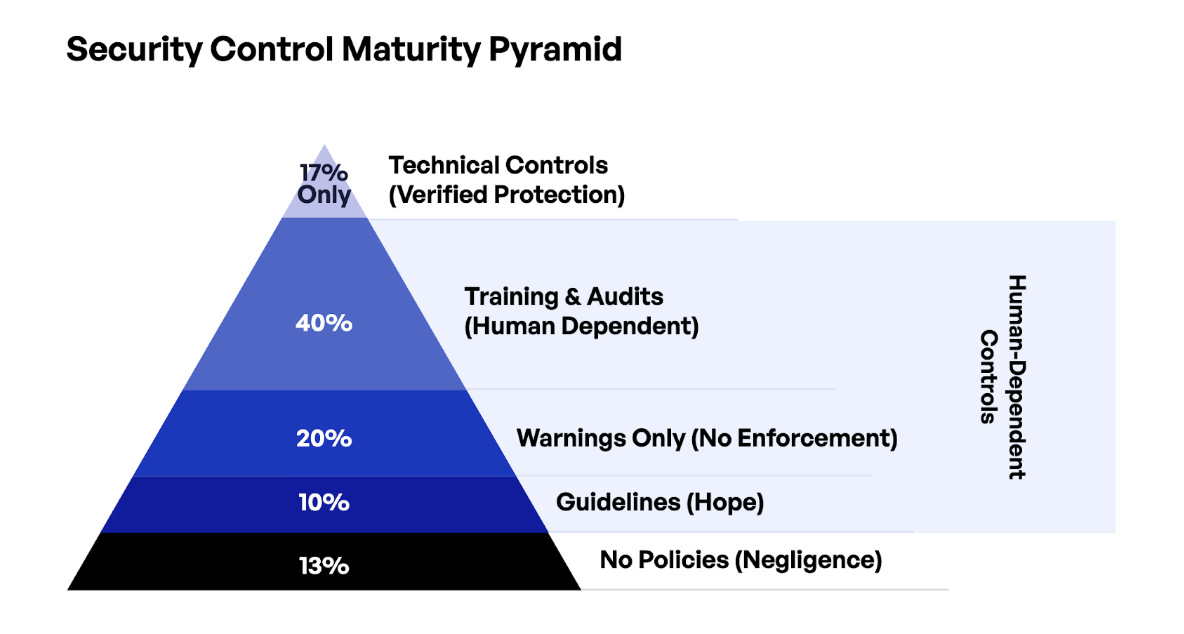 State of AI security implementation.
Source: Kiteworks.
State of AI security implementation.
Source: Kiteworks.
The Current State of Enterprise AI Security
To understand why AI security strategies matter so much right now, let's look at the threats lurking in enterprise operations. On one hand, the use of AI aligns precisely with modern requirements for flexible and scalable security. Traditional security measures were built for static software environments, and they often fall short with dynamic, learning systems. IBM's Cost of a Data Breach Report says that companies using security AI and automation found and stopped data breaches 108 days faster on average. These companies also saved an average of $1.76 million on breach response costs, which is even more impressive. But here's the flip side: attacks are ramping up fast. Research shows a 183% year-over-year increase in security incidents, proving that malicious threat actors are actively targeting AI services and AI applications. The takeaway is clear: putting solid AI security solutions in place to protect data isn't optional anymore; it's a business necessity.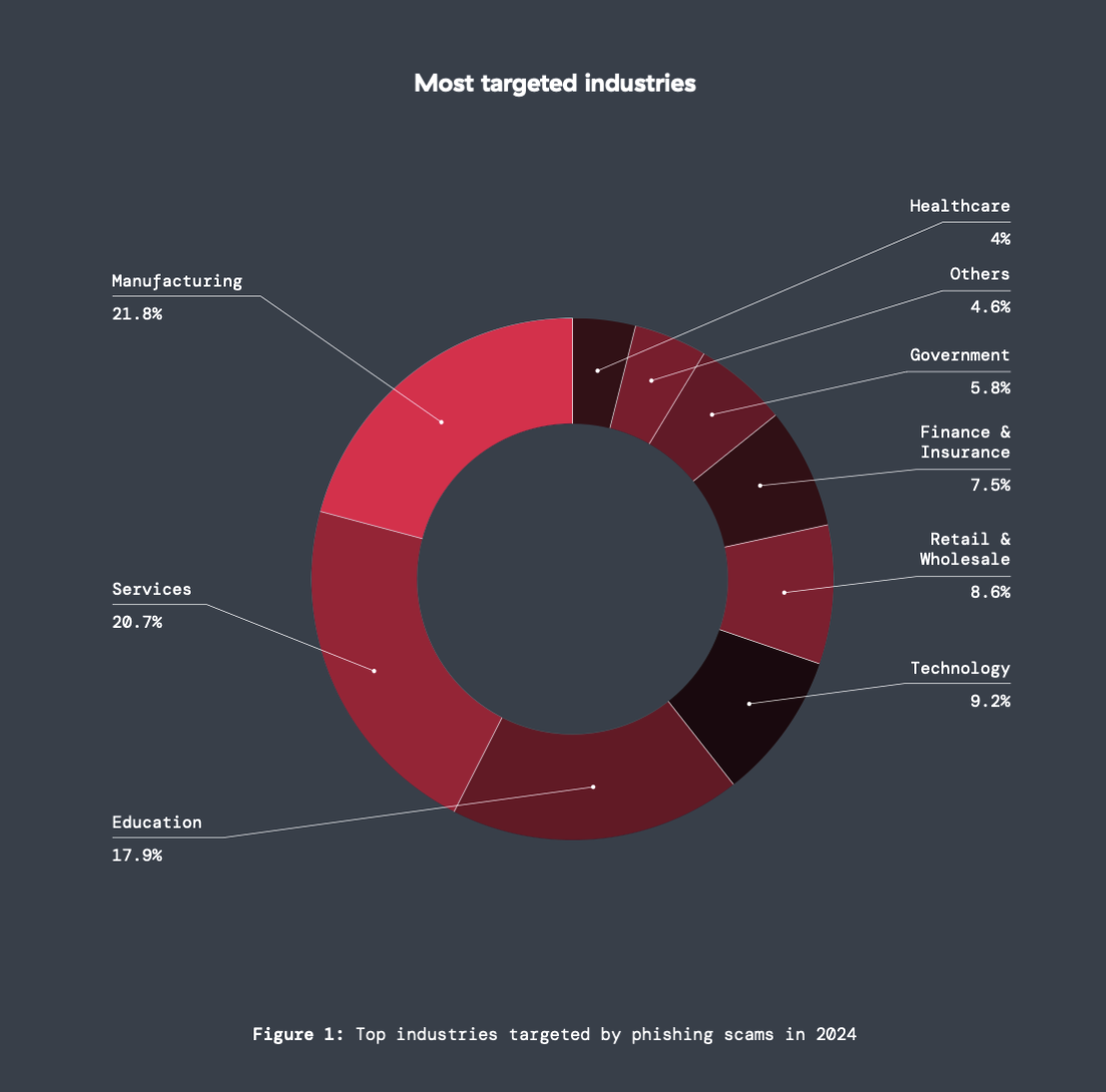 Source: Zscaler
Unique Vulnerabilities in AI Applications
AI introduces attack vectors that don’t look anything like traditional cyber threats. Knowing these key risks and security threats is the first step in building a solid defense:- Adversarial attacks: Malicious actors make small tweaks to input data that push machine learning models into bad decisions—for example, tiny changes to a financial document that humans wouldn’t notice but a fraud model might.
- Prompt injection: The most common Generative AI threat. Attackers hide commands inside user input to steer the model off course—responsible for about 43% of reported incidents.
- Data poisoning: Poisoned data in the training set can quietly steer a model in the wrong direction. Because the issue is learned, not injected later, it’s much harder to trace back or correct.
- Model theft and extraction: Reverse engineering a proprietary model by hammering it with queries, effectively stealing the logic that gives you an edge.
The Cost of Inadequate AI Security
When you fail at securing AI infrastructure, the consequences go way beyond immediate technical problems. History gives us some harsh examples. Think about the Yahoo breach between 2013 and 2016, which compromised 3 billion accounts due to persistent vulnerabilities. Or take the Marriott breach that exposed data from 500 million guests. It wasn’t an AI incident, but it shows how damaging security gaps can be. AI systems, with access to far larger and more sensitive datasets, raise the stakes even more And the damage isn’t just financial. As AI‑specific regulations multiply, failing to meet them can trigger steep fines. In fact, recent analysis shows that almost three‑quarters of regulatory penalties stem from data leaks. For a broader look at protecting corporate information, check out our data protection strategies post.Foundational Elements of AI Security Strategies
To manage these risks effectively, enterprises need a strategy built on three core pillars: risk assessment, data control, and lifecycle security. Let's dig into each one.Risk Assessment and Threat Modeling
Spotting AI risks and improving an organization's security posture takes a structured approach. You can't protect what you haven't mapped out. Leading organizations use frameworks like the NIST AI Risk Management Framework, which breaks things down into four functions:- Govern: Establish accountability and oversight structures
- Map: Identify everywhere risks might pop up in your AI systems
- Measure: Assess how serious each risk actually is
- Manage: Take steps to reduce risks based on severity and likelihood
 Source: NIST
The MITRE ATLAS framework is another great tool. It catalogs real-world adversarial tactics and helps security teams model threats like data poisoning and evasion attacks based on actual case studies. Think of it as a playbook showing what attackers have already tried.
Source: NIST
The MITRE ATLAS framework is another great tool. It catalogs real-world adversarial tactics and helps security teams model threats like data poisoning and evasion attacks based on actual case studies. Think of it as a playbook showing what attackers have already tried.
Data Protection and Privacy Controls
Data is the backbone of artificial intelligence. Without good data, you can't have good AI, but without secure AI data, you're building on sand. Solid security starts with managing data the right way: setting clear policies for collection, storage, and data access. Encryption and anonymization are your first line of defense. Use encryption and tokenization to protect sensitive data and block unauthorized access. Data minimization matters too. Only use the data you actually need for training and inference. Sloppy governance can lead to issues where malicious actors inject false data that throws off your AI's decisions. Here's some good news: implementing formal privacy impact assessments has been shown to cut privacy-related incidents by 76% and significantly lower remediation costs. For organizations on cloud infrastructure, following AWS security best practices is essential for keeping data intact.AI Model Security Throughout the Lifecycle
Model security and model protection need to be built in from the initial design phase all the way through deployment and monitoring. It's not something you tack on at the end, it has to be woven into every stage of development. Running regular vulnerability assessments on model architecture can cut post-deployment security incidents by 64%. Proactive adversarial testing, or "red teaming," helps you find vulnerabilities before attackers do. Research shows that red team exercises designed specifically for AI cybersecurity find 3.2 times more security risks than standard penetration testing. Putting a secure software development lifecycle in place means security checks get embedded in your CI/CD pipeline, catching issues early when they're cheapest to fix.Enterprise Artificial Intelligence Governance Frameworks
Governance is where strategy turns into action. Organizations with formalized AI governance structures see 3.7 times greater ROI on their AI investments compared to those winging it with ad-hoc approaches.Establishing Security Teams and Roles
AI governance isn’t something IT can handle on its own. It requires input from security, legal, compliance, ops, and leadership. The simplest way to make that happen is through a cross-functional committee that brings those groups together. Be clear about who has deployment approval power and who's accountable for system performance. Companies with well-defined accountability frameworks resolve AI-related incidents faster than those without. For tips on structuring data oversight, check out our guide on data governance frameworks.Policy Development and Enforcement
Clear policies on acceptable AI use are critical. While adoption is growing, governance often lags behind. A McKinsey survey found that human intervention regarding model outputs jumped from 35% to 45% between 2023 and 2024, but many organizations still lack solid validation processes. Two areas deserve special focus. One is shadow AI, which is when employees use unapproved AI tools or plugins without any oversight. It’s basically shadow IT with an AI twist, and it carries the same risks. The other is vendor management (we’ll discuss it in more detail below). You need firm standards for evaluating any third-party AI product before it gets access to your data.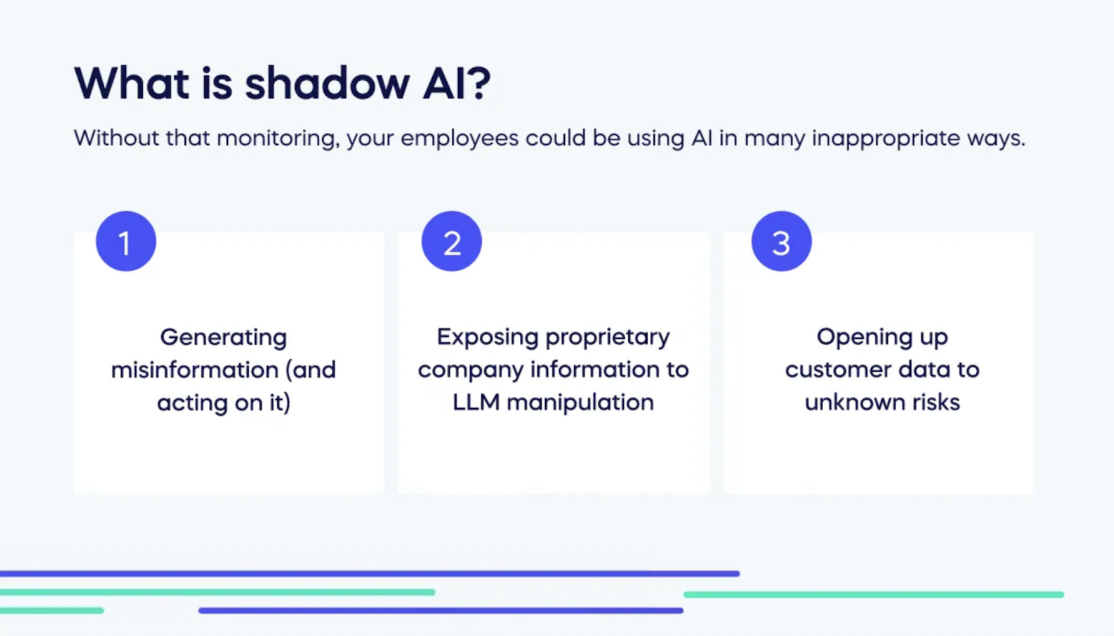 Source: Walkme
Compliance and Regulatory Considerations
U.S. federal agencies introduced 59 AI-related regulatory requirements. That's not a typo. The regulatory landscape is complex and getting more so by the day. Regulatory compliance strategies need to address:- GDPR and CCPA: Core data privacy regulations
- HIPAA: Healthcare-specific rules—keeping HIPAA-compliant AI systems is a must for protecting patient data
- EU AI Act: Emerging standards for automated decision-making
Technical Implementation of AI Security Solutions
Now let's get into the technical nuts and bolts. Implementing AI security calls for a mix of advanced monitoring and strict access controls. This section keeps things practical for both technical and executive audiences.AI Attack Detection and Monitoring
Continuous monitoring is key for enhanced threat detection and response. The speed difference is huge: organizations using behavioral analytics for model monitoring spotted and contained anomalies on an average of 98 days faster than those without. That's like catching an intruder at the door versus finding them after they've ransacked the place. AI capabilities can build baselines of normal network security behavior, letting you instantly spot deviations that might signal advanced threats. Automated drift detection tools catch data or concept drift, spotting evolving risks before they become crises. Tools like Datadog, Splunk, and Amazon SageMaker Model Monitor offer AI-specific monitoring capabilities, and most integrate smoothly with existing enterprise infrastructure without requiring a major overhaul.Model Protection and Anti-Tampering Measures
Protecting the model itself means technical controls to prevent data manipulation. Input validation is crucial. You must sanitize all inputs to stop prompt injection and adversarial data from getting into the system. Think of it as a bouncer checking IDs at the door. Adversarial training is another powerful approach: train models on adversarial examples to make them tougher against attacks. It's like vaccination for your AI. Expose it to weakened threats so it builds immunity to the real ones.Access Controls and Authentication
Zero Trust architecture is the gold standard for securing AI environments. It works on continuous verification rather than implicit trust—never assume, always verify.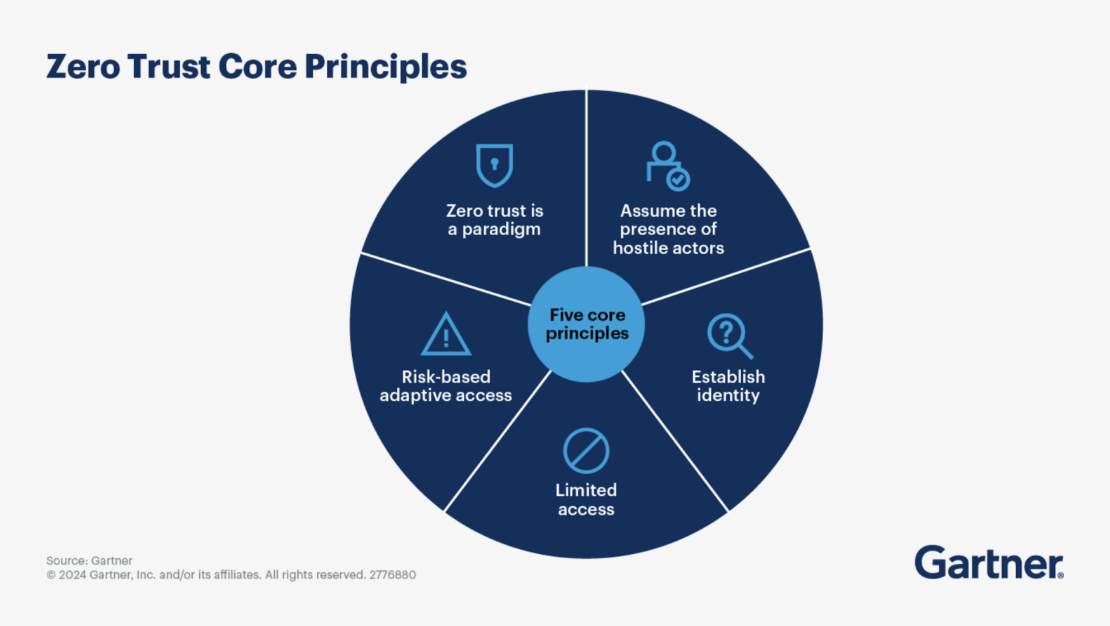 Source: Gartner
Organizations that apply AI-specific IAM controls have seen unauthorized access attempts drop by 80%. The rule is simple: follow least privilege and give AI agents only the access they truly need for data protection.
Bringing DevSecOps into the process ensures authentication is built into the deployment pipeline from the start.
Source: Gartner
Organizations that apply AI-specific IAM controls have seen unauthorized access attempts drop by 80%. The rule is simple: follow least privilege and give AI agents only the access they truly need for data protection.
Bringing DevSecOps into the process ensures authentication is built into the deployment pipeline from the start.
AI Security Best Practices for Enterprises
To keep a strong security posture, enterprises should follow these AI security best practices drawn from industry standards and real-world experience.Security Awareness Training for AI
Security tools are only as effective as the people behind them. Make sure your team knows how to spot AI-specific risks in things like prompt-injection tricks, odd model behavior, or social-engineering attempts aimed at your AI systems. And don’t wait for a once-a-year training day. Ongoing, practical training helps build a real culture of security.Third-Party AI Vendor Management
As we already mentioned above, supply chain security is critical. Attackers often exploit third party components and pre-trained AI models from unverified sources. Vet your vendors carefully and demand strict security certifications. Choosing the right infrastructure matters. For a comparison of major platforms, read our analysis on cloud environments and AI platform selection.Incident Response for AI Security Events
Standard incident response plans often fall short for AI-specific threats. Use Security Orchestration, Automation, and Response (SOAR) platforms to coordinate tools and automate workflows when threats pop up. Build response procedures specifically for emerging threats like phishing attacks, model inversion, or data poisoning, ensuring faster incident response.Real World Use Case: Automating Federal Compliance with Secure AI
Kanda recently partnered with a well-known cybersecurity company that serves federal, commercial, and Defense Industrial Base clients. These organizations must follow strict frameworks like FISMA, FedRAMP, and CMMC, which are requirements that usually mean a lot of manual paperwork. Kanda is now building a specialized AI platform to make NIST compliance easier and faster. The goal is to automate routine tasks and reduce human error without compromising the high security standards federal agencies depend on. The platform uses advanced AI to turn compliance from a simple checklist into a more dynamic, secure process. Key features include:- Fine-tuned LLMs trained on complex federal standards like CMMC and FISMA.
- Automated AI processes for analysis and document generation.
- Active oversight through monitoring and alerts to keep policies aligned.
- Human-in-the-loop tools like an Auditor Co-Pilot and chatbot that keep experts at the center of key decisions.
Building Your Enterprise AI Security Roadmap
Putting these strategies into action takes a phased approach. No organization can tackle everything at once. The key is starting with fundamentals and building systematically.Assessment and Gap Analysis
Start by cataloging all your AI tools, agents, and data pipelines. Most organizations uncover tools in use that leadership didn’t even know about. Then run a gap analysis against frameworks like the NIST AI RMF. It gives you a clear view of your current controls and the areas that need attention.Our AI Consulting services help turn that assessment into an actionable AI governance roadmap, prioritizing security gaps, control ownership, and implementation steps across your existing systems.
Phased Implementation Approach
Break your implementation into manageable phases:- Immediate: Focus on visibility. Discover all artificial intelligence assets because you can't protect what you don't know about.
- Short-term: Implement endpoint security for mobile devices and deploy security tools for threat detection.
- Long-term: Integrate threat intelligence to analyze the threat landscape and set up continuous improvement loops.
Measuring Success and Continuous Improvement
Monitor metrics such as MTTD (Mean Time to Detect) and MTTR (Mean Time to Respond). Proactive AI security efforts consistently drive these numbers down. But AI security is ongoing. As threats change, your defenses have to adapt.How Kanda Helps You Protect AI Data
To protect sensitive information from AI-driven threats, you need specialized knowledge and a proactive approach. Kanda offers a full range of services to make sure that your artificial intelligence AI projects are both innovative and safe.- Custom Security Strategy: We help you design and implement governance models tailored to your specific regulatory and operational needs.
- Secure ML Development: Our teams integrate security into the entire ML lifecycle, from data preparation to model deployment.
- Vulnerability Assessments: We conduct rigorous red-teaming and risk assessments to identify vulnerabilities in your AI infrastructure.
- DevSecOps Implementation: We seamlessly integrate security controls into your existing CI/CD pipelines for automated protection.
Final Thoughts
Keeping AI secure requires a mix of strong protections, smart technical controls, and clear governance. Once AI moves into real operations, security is something you will need to continuously uphold. Ongoing review and adjustment are essential to stay ahead of evolving threats. Organizations that get started on AI security sooner will innovate with far more confidence and avoid cleanup work later.Related Articles

How to Turn Your Broken Data Workflows Into Scalable Data Pipelines: An Ultimate Guide
Key Takeaways Workflows break at scale not because of selecting wrong tools, but because project-level habits, manual handoffs, copy-pasted scripts become the operating model. The architecture patterns that enable scalability: decoupled storage and compute, deliberate data layering, and orchestration treated as a control plane. Pipeline reliability is a delivery problem too. Version control, CI/CD, and…Learn More
Why Using Edge AI for Real-Time Analytics Is Your Next Best Decision
Key Takeaways: Edge AI processes data locally in 1–10 ms, compared to 50–200 ms with cloud-based analytics, making it critical for time-sensitive operations. Organizations can cut data transmission costs by up to 43% and reduce cloud-bound traffic by over 90% by filtering data at the edge. Industries like manufacturing, healthcare, autonomous vehicles, and smart cities…Learn More
Why Human-in-the-Loop AI Is Necessary in the Age of Automation
AI is spreading through businesses much faster than most people anticipated. Data from a Fullview report shows that 78% of organizations now utilize artificial intelligence in at least one part of their operations, which is a significant jump from 55% back in 2023. At the same time, 71% of these companies are regularly using generative AI…Learn More
Building Trust in AI Agents Through Greater Explainability
We’re watching companies leap from simple automation to an entirely new economy driven by self-governing AI agents. According to Gartner, by 2028 nearly a third of business software will have agentic AI built in, and these agents will be making at least 15% of everyday work decisions on their own. While that can significantly streamline…Learn More