
January 20, 2023
General
Step-by-Step Approach to Building a Custom CRM for Your Enterprise
In the era of ever increasing consumer power, building and maintaining strong relationships with customers becomes a crucial element for long-term business success. As per Outbound Engine, acquiring a new client is five times more costly than retaining a current one. At the same time, boosting customer retention by only 5% can help improve company profits by 25-95%.
While businesses can acquire and retain customers through multiple strategies, CRM is the glue that holds everything together.
What is a CRM solution?
CRM, or a Customer Relationship Management system, is a multifaceted tool that enables businesses to collect and synchronize customer data across all points of contact, which typically include a company’s website, direct mail, social media, messengers, and phone numbers. With built-in analytics capabilities, modern CRM solutions make it easy to derive valuable insights into customer service efforts and sales operations. Depending on the industry, the benefits of having a clean, centralized customer database can vary but key advantages include:- Increased sales and revenue. A CRM tool with rich customer profiles can help businesses deliver personalized customer experiences and tailored offerings, potentially increasing sales. Lead management functionality enables tracking and maintaining relationships with potential customers, ultimately converting cold leads into hot prospects.
- Improved customer retention rates. To prevent customers from leaving, CRM solutions can help track changes in customer behavior and provide sentiment analysis to help salespersons determine problems in time and address them.
- Better team productivity and efficiency. A CRM software solution can automate time-consuming tasks like email drip campaigns and free team members to focus on more creative work like curating content.
- Informed decision-making. CRM solutions provide contextualized data and easy-to-understand metrics that help companies judge the success of their marketing campaigns and fine-tune them as necessary.
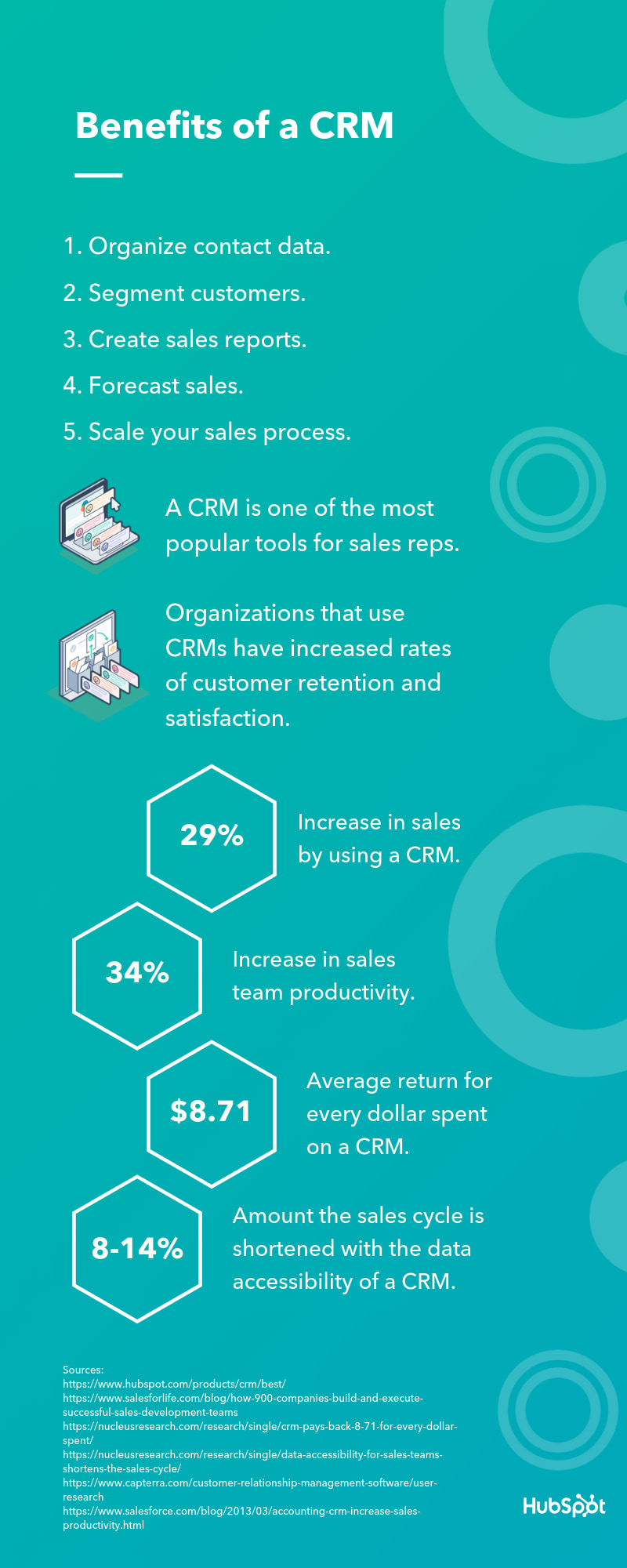
Advantages of using a CRM solution in numbers:
Source: Hubspot
According to Nucleus Research, CRM pays back $8.71 on every dollar spent on its implementation. Given these numbers, it comes as no surprise that CRM systems are one of the fastest growing segments of the software development market. In 2022, the CRM market amassed USD 58.82 billion and it is expected to grow at a CAGR of 13.9% from 2023 to 2030.Build vs. buy approach
Although SaaS CRMs are experiencing 13.43% growth, the debate over buying an off-the-shelf solution or building a custom one is ongoing. Indeed, a ready-made CRM system may come with lower upfront costs and faster time to market, but it may also have limited functionality or features your business doesn’t really need but still has to pay for. Moreover, since every business is unique, you will need to fine-tune a CRM solution to meet your unique requirements, which can ultimately translate into high customization costs. What further complicates things is the integration approach. If your business already relies on ERP tools, accounting systems, financial and invoicing solutions or in-house platforms, a new CRM needs to seamlessly integrate with them. Already-built CRM solutions usually offer limited third-party integration capabilities and may still require significant programming skills to make everything work. Custom CRMs can be built to handle even the most specific integration cases and ensure smooth data transfer between your enterprise systems.How to build a custom CRM solution
1.Define your goals
First things first, you need to identify stakeholders of your future CRM system — sales managers, customer support specialists, marketing department, and more. By closely collaborating with them, you can discover their needs, how they are going to use the system and what goals they want to achieve with it. This input is crucial for creating a truly efficient tool that solves the right problems instead of building a system just for the sake of it.2. Define the feature set
Depending on the focus, a CRM solution can have sales, marketing, customer service modules, or a combination of those. And rather than rushing to developing a full-fledged CRM system, start with an MVP that has the core features to streamline the most time-consuming workflows and see ROI as fast as possible.
Source: MakeWebBetter
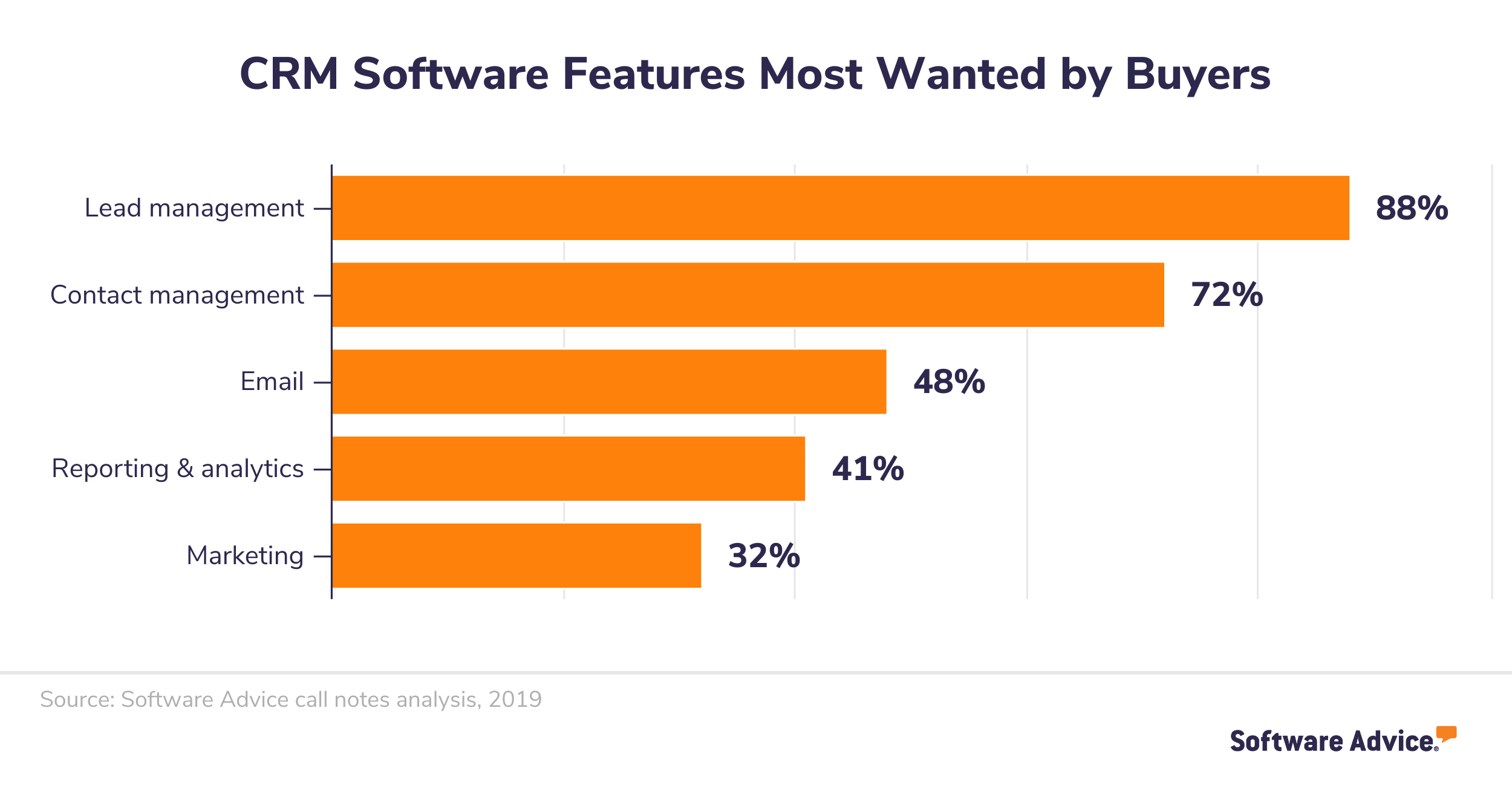
Lead management
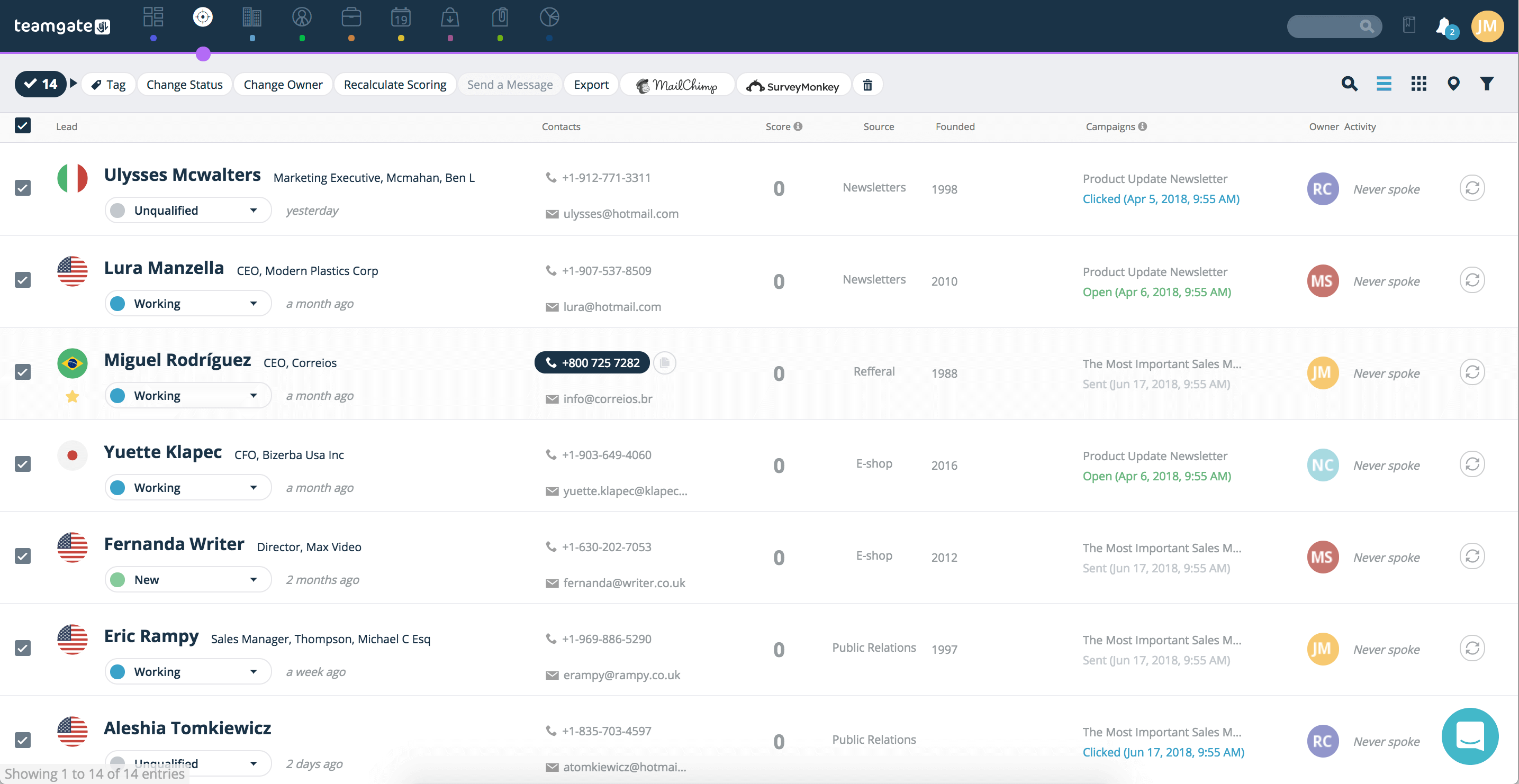
One of the most important CRM modules, lead management focuses on nurturing leads until they are turned into business opportunities. To do that, the lead management feature helps to capture leads, enrich profiles with available information and accurately score them so that sales reps would not have to waste time on leads that are less likely to convert.
Source: Teamgate
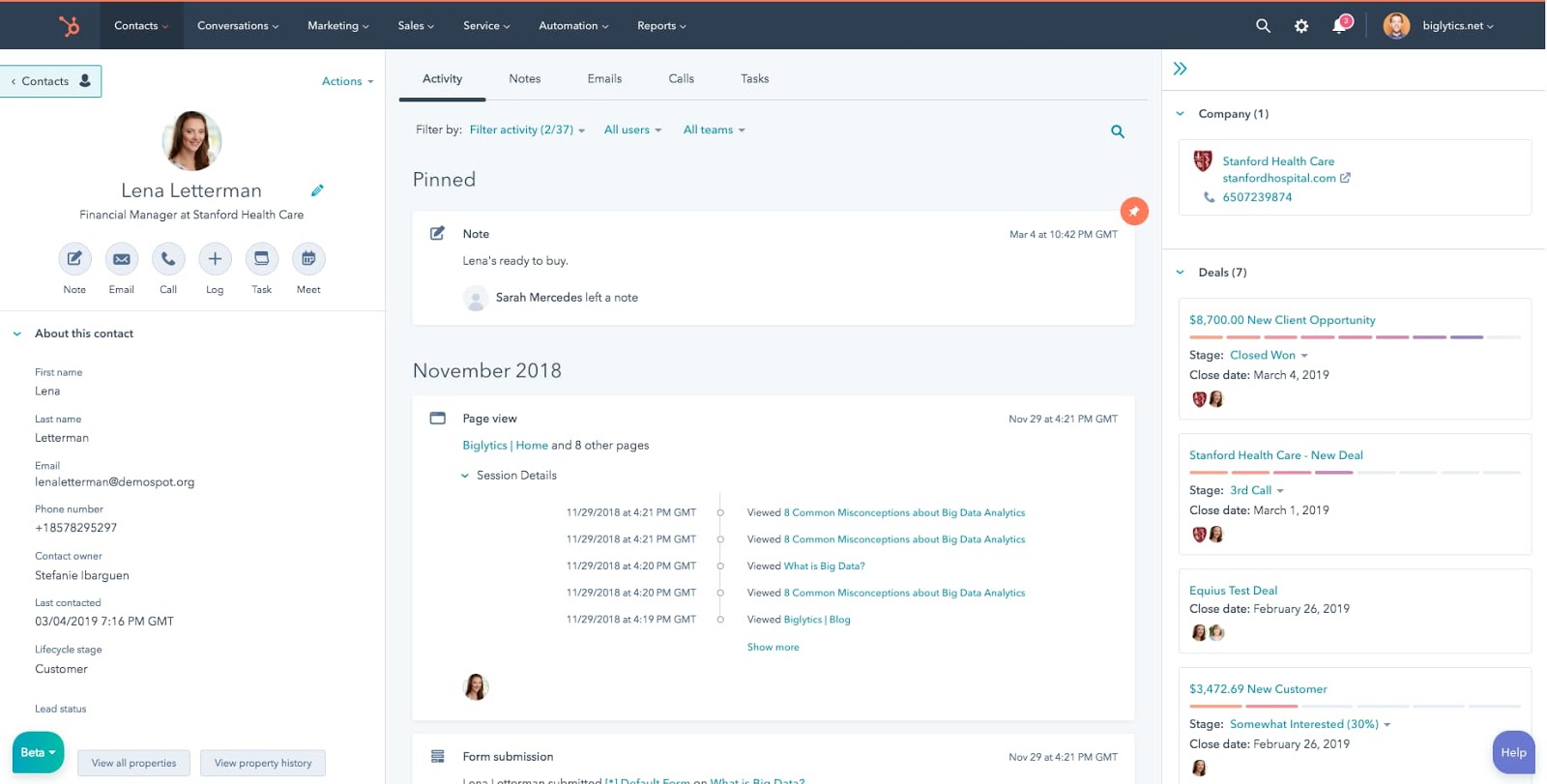
Contact management
Contact management refers to the process of entering, editing, and storing data on current customers and prospects to make it readily available for all departments. Not only does this module collect all available data, it also helps marketers monitor all customer interactions throughout an entire client lifecycle and across all channels of communication.
Source: HubSpot
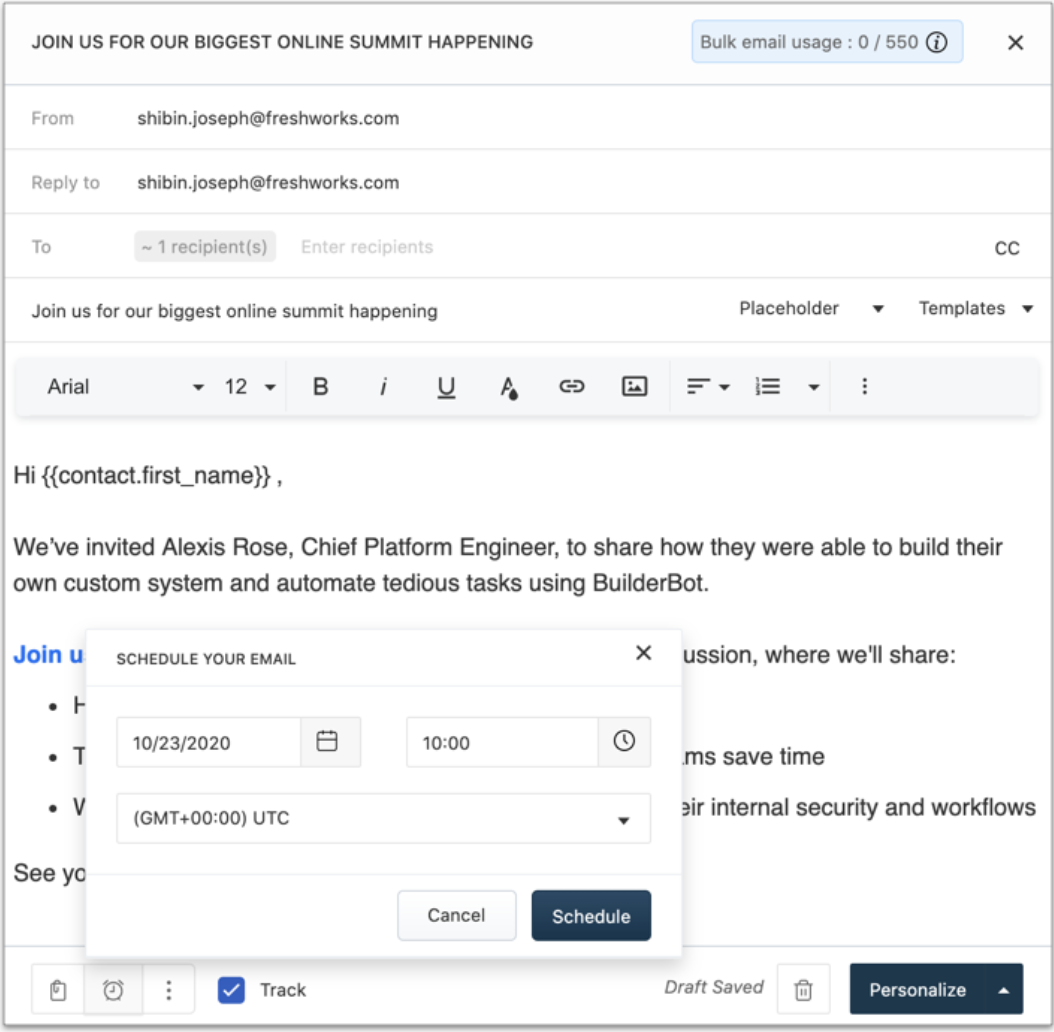
Email automation
An email automation module can come with such features as email templates, scheduling, reminders, email drip campaigns, list segmentation, mass emailing, A/B testing, email analytics and more to enable effective email communication.
Source: Freshworks
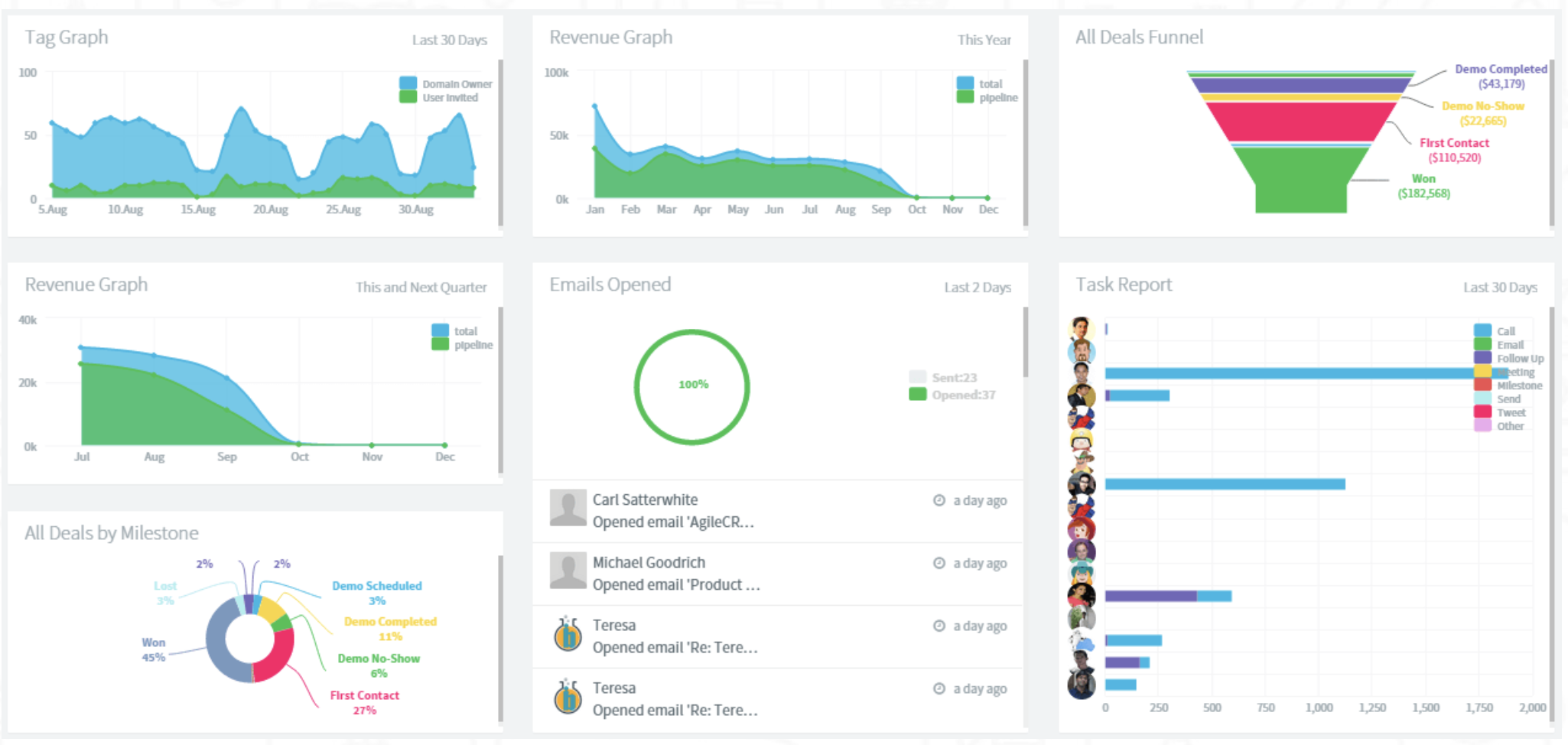
Reporting and analytics
Advanced analytics capabilities are a must for businesses that want to gain deeper insights into consumer behavior and better understanding of sales and marketing performance. To help teams make data-driven decisions, a CRM solution needs to provide easy-to-understand reports and actionable dashboards.
Source: Agile CRM
Marketing automation
From granular audience segmentation and personalized messaging to social media integration and content performance analysis, marketing automation features enable a marketing team to run more efficiently.3. Engage a trusted development partner
As we have mentioned earlier, each business has unique needs when it comes to custom software development. For a healthcare institution, HIPAA-compliant CRM is a priority, while a real estate agency needs a property management feature. Finding the right technology partner is half of your project’s success. It is a good idea to find a software development provider with experience in building CRM systems for your niche. Check the portfolio of a potential development partner for relevant projects and talk to tech specialists to gauge their understanding of your domain.4. Launch and collect feedback
Once a CRM solution is implemented, it’s time to start collecting feedback from teams using the system for their day-to-day operations. This is the fastest and bulletproof way to understand if some important functionality is missing or if there are any bugs that slipped through the testing phase. In fact, top-tier software development companies provide a warranty period to fix bugs at no charge.Ready to build your own CRM solution?
A fully functional CRM can be a real game changer. If your business relies on efficient management of customer data, marketing prospects and sales opportunities, investing in a custom CRM solution can make all the difference to your bottom line. With over 25 years of experience under the belt, Kanda offers a full range of software development services from discovery and analysis to POC and MVP development to maintenance and support. Kanda’s extensive expertise in scalable cloud-based solutions, business intelligence and data analytics is instrumental in building flexible, easy-to-use CRM solutions that drive business growth. Drop us a line describing your CRM needs and our experts will get back to you to discuss the details.Related Articles

How to Turn Your Broken Data Workflows Into Scalable Data Pipelines: An Ultimate Guide
Key Takeaways Workflows break at scale not because of selecting wrong tools, but because project-level habits, manual handoffs, copy-pasted scripts become the operating model. The architecture patterns that enable scalability: decoupled storage and compute, deliberate data layering, and orchestration treated as a control plane. Pipeline reliability is a delivery problem too. Version control, CI/CD, and…Learn More
Why Using Edge AI for Real-Time Analytics Is Your Next Best Decision
Key Takeaways: Edge AI processes data locally in 1–10 ms, compared to 50–200 ms with cloud-based analytics, making it critical for time-sensitive operations. Organizations can cut data transmission costs by up to 43% and reduce cloud-bound traffic by over 90% by filtering data at the edge. Industries like manufacturing, healthcare, autonomous vehicles, and smart cities…Learn More
Why Human-in-the-Loop AI Is Necessary in the Age of Automation
AI is spreading through businesses much faster than most people anticipated. Data from a Fullview report shows that 78% of organizations now utilize artificial intelligence in at least one part of their operations, which is a significant jump from 55% back in 2023. At the same time, 71% of these companies are regularly using generative AI…Learn More
Comprehensive AI Security Strategies for Modern Enterprises
Over the past few years, AI has gone from a nice-to-have to a must-have across enterprise operations. From automated customer service to predictive analytics, AI technologies now handle sensitive data like never before. A Kiteworks report shows that over 80% of enterprises now use AI systems that access their most critical business information. This adoption…Learn More